9 Best AI Agents for Content Distribution
Explore the best AI agents for content distribution to scale content creation, automate workflows, and keep brand voice consistent across channels.

A strong content engine can still fall flat once distribution starts. Assets pile up, channels multiply, and marketing teams end up spending more time reformatting and chasing approvals than getting content in front of the right audience.
AI agents for content distribution are built for this exact problem. They go beyond generic AI tools by using audience data, performance data, brand guidelines, and workflow automation to support content creation, adapt messaging for multiple platforms, and keep brand voice consistent at scale.
In this guide, we break down the best AI agents for content distribution and where each one fits inside modern content marketing workflows.
Why Marketing Teams Are Using AI Agents For Content Distribution In 2026
Marketing teams are producing more assets than ever, and distribution takes a huge share of time and energy.
One campaign can branch into social media posts, email copy, long-form articles, and tailored variations for different audience segments.
Keeping every asset aligned with brand voice, brand guidelines, and channel goals turns content distribution into a heavy operational job.
AI adoption is already widespread in marketing. HubSpot reports that in 2026, 66% of marketers use AI in their roles.
Interest keeps rising for a simple reason. AI agents for content distribution help teams move from draft to delivery with more speed, more context, and more consistency.
They can work from audience data, behavioral data, performance history, and structured data to shape content for multiple platforms, support content workflows, and improve content delivery across channels.
Agent workflows can handle research, generate content, prepare multiple formats, and surface actionable insights while human oversight protects brand consistency, quality, and strategic judgment.
Quick Overview Of The Best AI Agents For Content Distribution
This table compares the strongest options by entry pricing, best-choice team, and the feature most likely to shape the buying decision
| Distribution.ai | Blog starts at $19/month. Podcast and YouTube start at $29/month. Plans are priced by content type, each with Creator, Pro, and Business tiers. Bundle all three and save up to 30%. A 15-day free trial is available. | Marketing teams, content teams, agencies, and creators who want repurposing plus distribution | Turns blogs, podcasts, and videos into channel-ready distribution assets, then connects scheduling, distribution, and analytics in one workflow. |
| Jasper | Pro starts at $69/month billed monthly or $59/month billed yearly. Business uses custom pricing. | Marketing teams focused on brand voice, brand guidelines, and campaign-scale content creation | Strong brand controls, connected content pipelines, and agent workflows built for maintaining brand consistency across multiple formats. |
| Aprimo | Pricing is sales-led. Aprimo says packages are based on users and modules, with contracts typically starting at 12 months and tailored by quote. | Enterprise marketing teams and content operations teams managing assets, approvals, and content delivery across channels | Agentic content operations with strong digital asset management, workflow automation, governance, and content delivery support across the content lifecycle. |
| MindStudio | Free includes 1 agent and 1,000 runs/month. Individual starts at $20/month plus usage. Business uses custom pricing. MindStudio also passes through AI model usage at cost. | Teams building custom AI agents for content distribution, research, and workflow automation | Flexible no-code builder with access to 200+ AI models and custom agent workflows built around your own content strategy. |
| Relevance AI | Free tier available. Paid plans start at $19/month. Pricing uses Actions and Vendor Credits, with top-ups at $80 per 1,000 Actions and $20 per 10,000 Vendor Credits. Enterprise pricing is custom. | Teams building multi-agent systems for content operations, research, routing, and content delivery | Strong fit for multi-agent workflows, analytics, integrations, and agent-based execution across marketing and GTM operations. |
| Salesforce Agentforce | Pricing includes Flex Credits at $500 per 100,000 credits, conversation pricing starting at $2 per conversation, and employee-facing add-ons from $125/user/month. Salesforce also offers calculator-based and sales-led pricing paths. | Enterprise marketing teams already running deep inside Salesforce | Pulls from CRM data, audience data, and workflow logic to power agent-driven content delivery and campaign operations inside Salesforce. |
| Customer.io | Essentials starts at $100/month billed monthly for 5,000 profiles. Premium starts at $1,000/month billed yearly. Enterprise is custom. Additional profiles cost $0.009 each, extra 1,000 emails cost $0.12, and extra AI credits cost $10 per 100,000. | Lifecycle, CRM, and content teams running agent-assisted messaging across audience segments | AI Agent support plus journeys, behavioral data, and message orchestration across email, push, in-app, SMS, and more. |
| Mutiny | Free starts at $0/month for up to 5 team members. Business starts at $50/month per seat. Enterprise starts at $30,000/year. Pricing uses a shared AI credit pool across the team. | ABM and demand gen teams personalizing content delivery for different audience segments | Brand-trained personalization with visitor intelligence and data-connected assets built for account-level content delivery. |
| Writer | Starter includes a 14-day free trial with up to 5 users. G2 pricing materials list Starter at $29 per user/month and Enterprise as contact sales. Writer also offers sales-led enterprise packaging and model-level usage pricing in AI Studio. | Marketing teams who care most about brand voice consistency, governance, and maintaining quality across large content programs | Enterprise AI agent platform with strong guardrails, knowledge graph support, and brand-compliant content creation across workflows. |
Quick overview of the best AI agents for content distribution in 2026 by entry pricing, best-fit team, and standout feature.
How We Evaluated The Best AI Agents For Content Distribution
These AI agents were selected based on how well they support content distribution across research, repurposing, workflow automation, and delivery.
The evaluation focused on workflow fit, integration capabilities, pricing clarity, brand voice controls, content quality, human oversight, and the way each platform uses audience data, performance data, and other relevant signals inside everyday marketing systems.
This curated list is built for marketing teams comparing widely used platforms for different distribution jobs, including agent-led research, content generation, personalization, audience segmentation, workflow automation, and multi-channel delivery.
Top AI Agents for Content Distribution in 2026
1. Distribution.ai — Best For Turning Existing Content Into Channel-Ready Distribution Assets
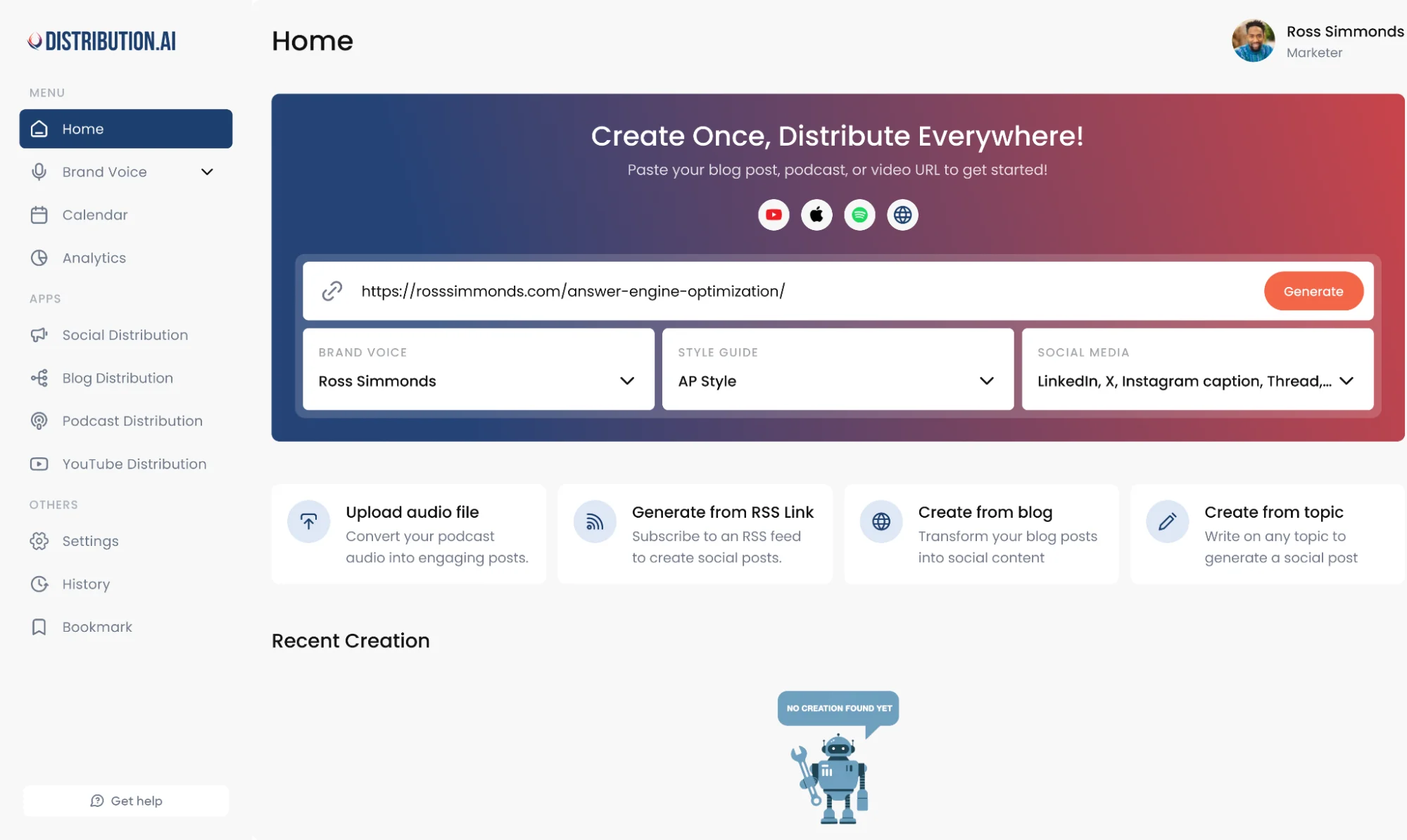
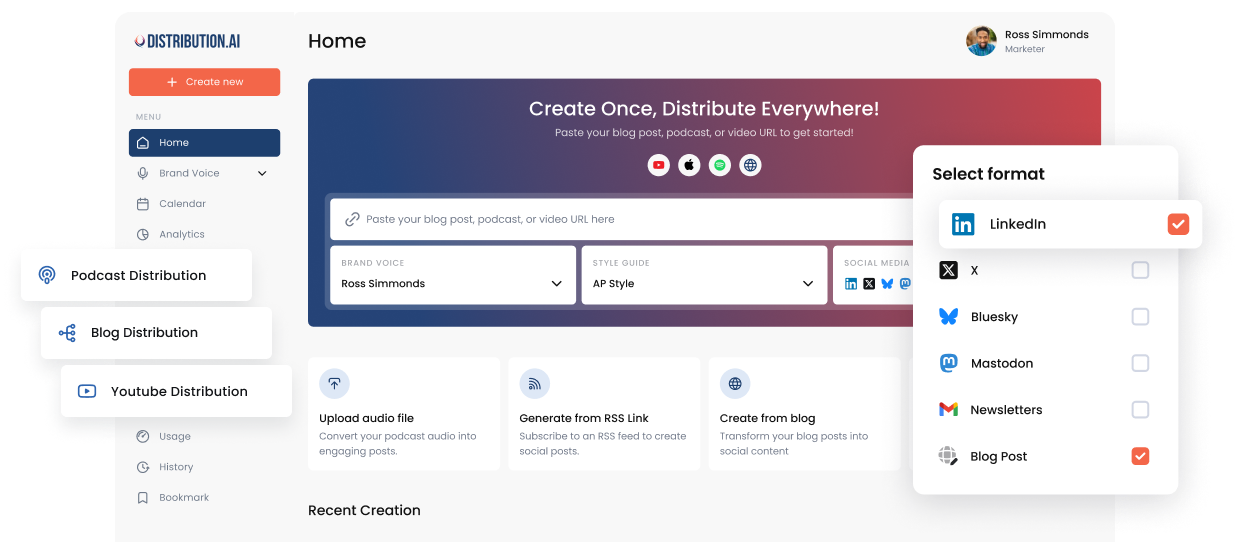
Most teams do not need more drafts. They need a faster way to turn the content they already have into assets ready for distribution. A webinar, blog, podcast, or video can fuel weeks of social posts, emails, and campaign support content, yet the work usually gets stuck in manual adaptation.
Distribution.ai is built for that stretch of the workflow. It helps marketing teams take one source asset and turn it into channel-ready outputs, then keep scheduling, distribution, and analytics in close alignment. The result is more usable content from the work your team already puts in, with less rewrite drag across channels.
Distribution.ai Is Best For
Distribution.ai is best for marketing teams, content marketers, social media managers, agencies, and growth teams with a steady stream of blogs, podcasts, or videos.
Distribution.ai’s Key Features
- AI repurposing for blog, podcast, and video workflows
- Platform-ready outputs for social media posts, newsletters, and other content formats
- Multi-channel scheduling and publishing from one dashboard
- Analytics tied to content performance history
- Tone and style controls for stronger brand voice consistency
Distribution.ai’s Pros
- Helps teams get more distribution assets from existing content
- Reduces manual adaptation across channels and formats
- Brings repurposing, publishing, and performance tracking into one workflow
- Gives content teams clearer visibility into what performs
Distribution.ai’s Cons
- Less useful for teams without a steady stream of source content
- Lower fit for teams focused only on basic scheduling
- Strongest value shows up when repurposing and distribution sit at the center of the workflow
Distribution.ai’s Pricing
- Blog starts at $19/month, billed monthly
- YouTube starts at $29/month, billed monthly
- Podcast starts at $29/month, billed monthly
- Bundle pricing offers up to 30% savings
- A 15-day free trial is available
- Best suited to teams buying around a primary content workflow, then expanding from there
2. Jasper — Best For Scaling Content Distribution With Strong Brand Control
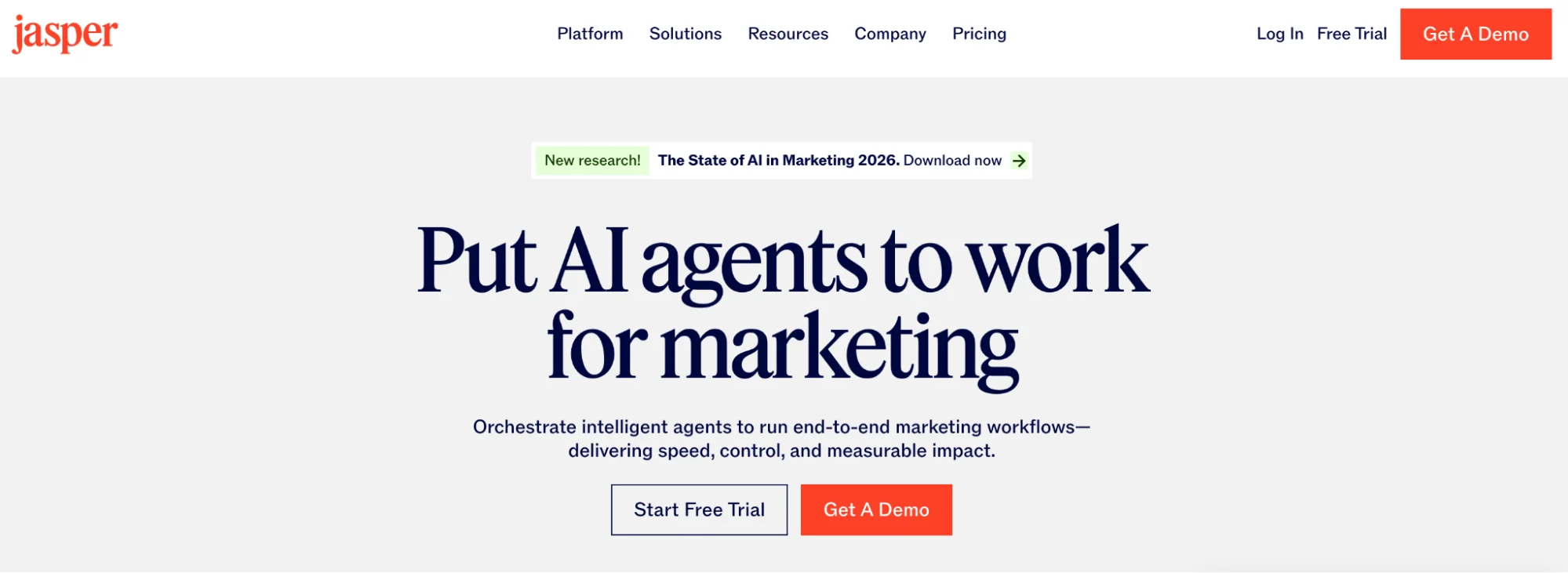
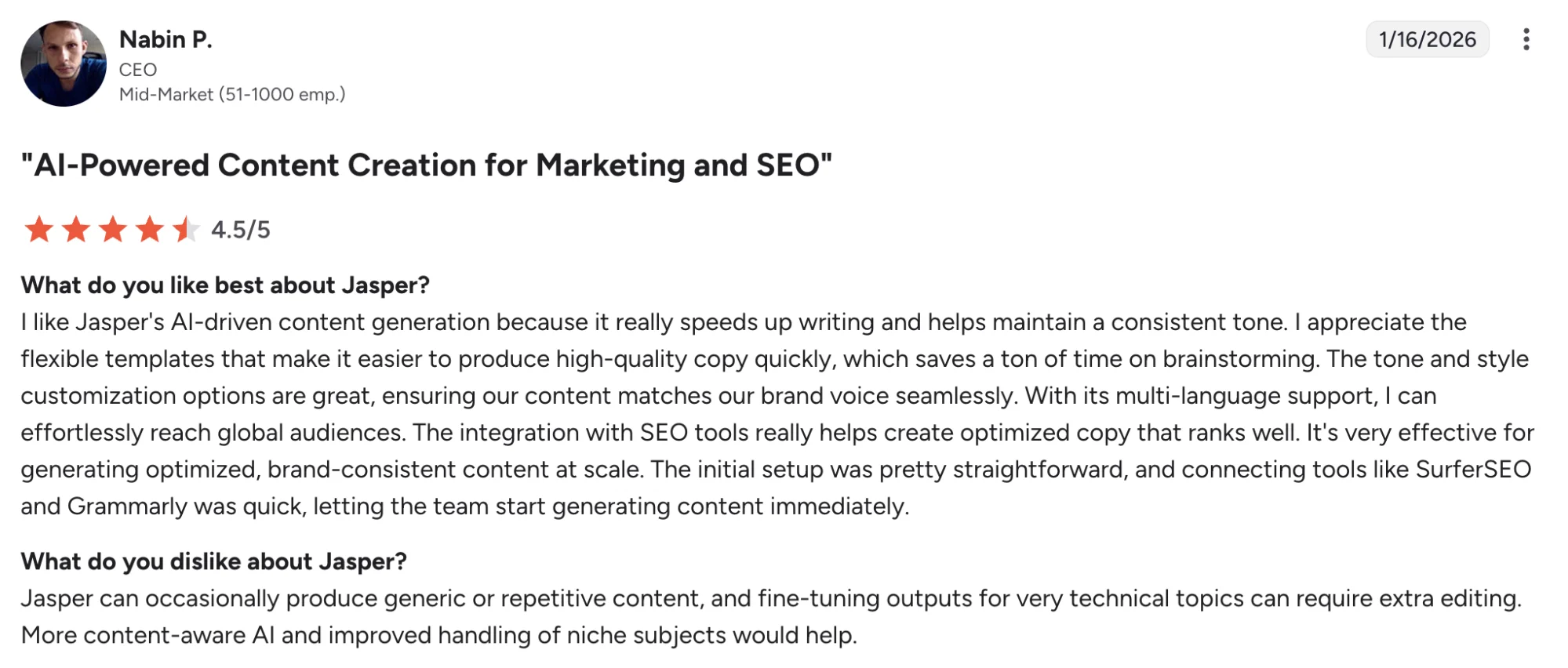
Jasper makes more sense once content distribution starts stretching across more people, campaigns, and channels than a team can comfortably manage manually.
The platform is designed for marketing teams seeking to maintain sharp and on-brand messaging while producing a high volume of assets for email, social media platforms, long-form articles, landing pages, and campaign support content.
Its real appeal lies in control. Jasper gives teams a structured way to scale output while keeping brand voice, brand guidelines, and content workflows far more organized.
Jasper Is Best For
Jasper is best for marketing teams, content teams, and larger organizations running high-volume content marketing across multiple platforms.
Jasper’s Key Features
- Brand voice and brand guidelines built into the content creation process
- AI agents and workflow tools for repeatable content creation workflows
- Campaign support across multiple formats, including social media posts, long-form articles, and video scripts
- Knowledge and context layers for stronger brand consistency across teams
- Custom AI solutions for teams building more structured content operations
Jasper’s Pros
- Keeps brand voice more consistent across campaigns and channels
- Helps marketing teams move faster through draft creation and content workflows
- Gives teams a stronger structure around approvals, governance, and maintaining consistency
- Works well for scaling content creation across large teams and multiple formats
Jasper’s Cons
- Pricing can feel steep for smaller teams
- Outputs still need editing for sharper quality and stronger nuance
- Human oversight stays important for factual accuracy and brand safety
- Greater value shows up in larger content operations than lighter publishing workflows
Jasper’s Pricing
- Pro starts at $69/month on monthly billing
- Pro starts at $59/month on annual billing
- Business uses custom pricing
- A free trial is available
- Best suited to teams buying for brand control, governance, and structured content distribution at scale
3. Aprimo — Best For Enterprise Content Operations And Governance Across Channels
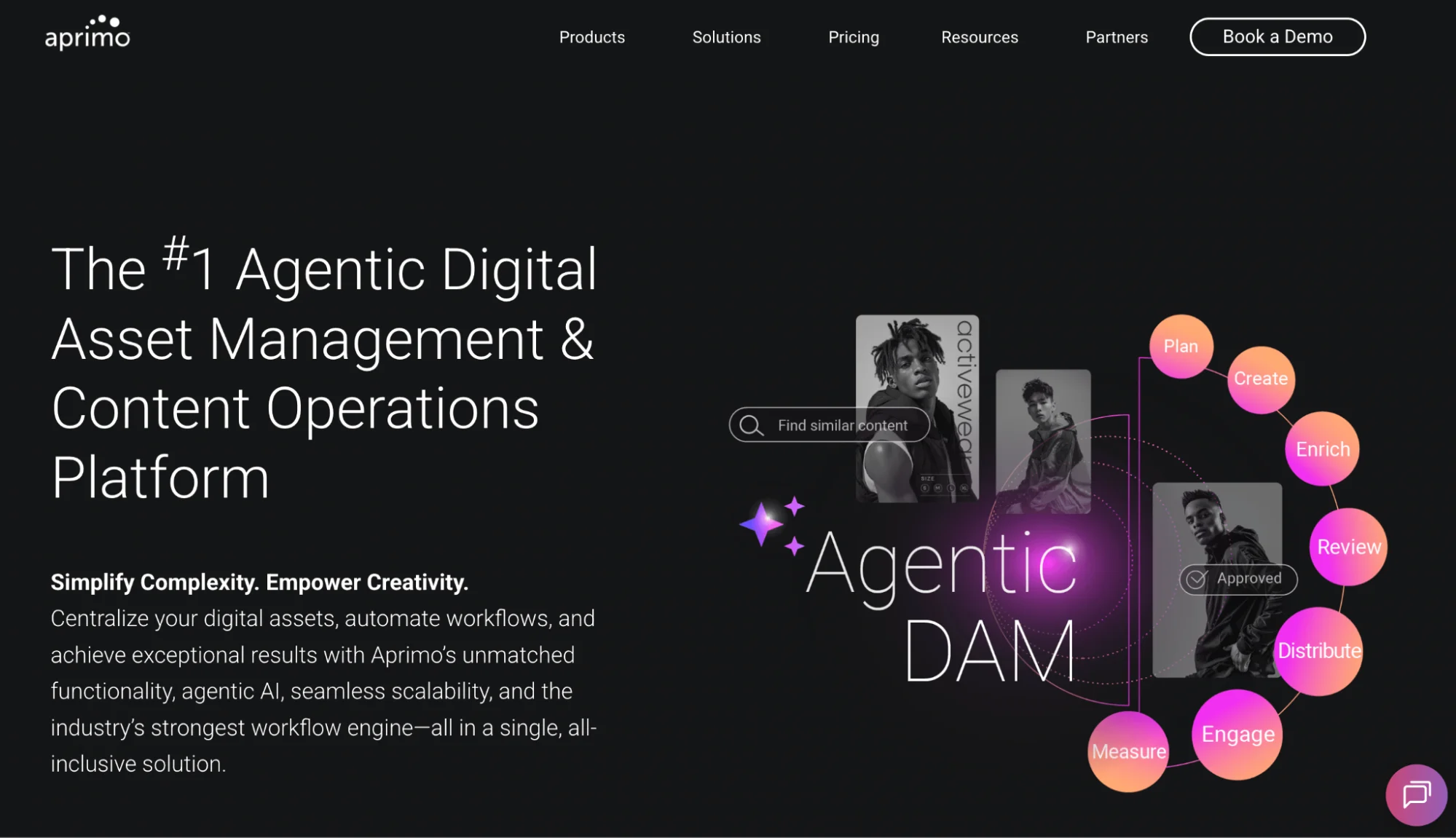
Aprimo fits large content operations where distribution depends on control as much as speed. Global teams often juggle approvals, asset libraries, localization, channel packaging, and performance visibility all at once.
This AI tool brings those moving parts into one system, which makes it a strong pick for marketing teams managing complex content workflows across multiple platforms with strict brand guidelines and heavy governance needs.
Aprimo Is Best For
Aprimo is best for enterprise marketing teams, content operations leaders, and brands with large asset libraries, layered approval paths, and multi-market distribution needs.
Aprimo’s Key Features
- Digital asset management built for large content libraries and governed access
- Workflow automation for reviews, approvals, routing, and content delivery
- AI-powered content operations tools for tagging, metadata, and planning
- Content intelligence tied to audience engagement and performance signals
- Enterprise support for integrations, governance, and secure collaboration
Aprimo’s Pros
- Centralizes assets and keeps campaigns easier to organize
- Improves visibility across teams, stakeholders, and approval flows
- Makes reuse easier through search, tagging, and asset organization
- Supports brand consistency across large content programs
Aprimo’s Cons
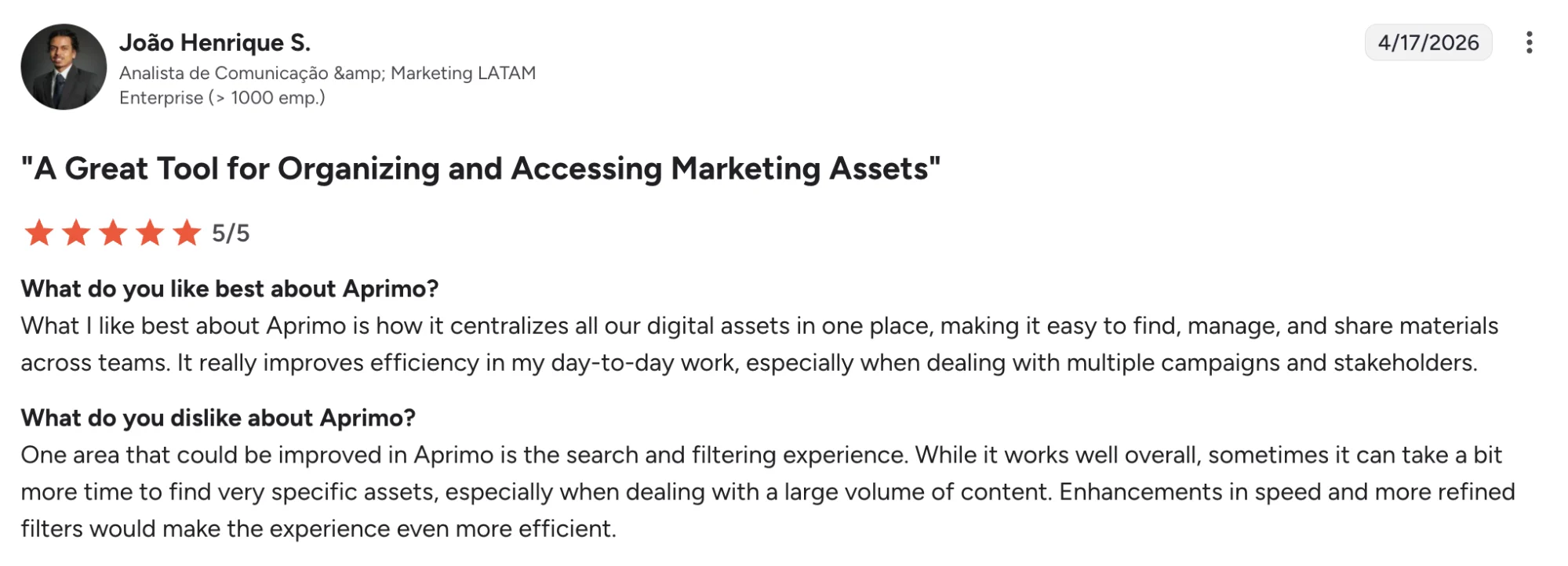
- The interface can feel less intuitive during onboarding
- Setup takes time, especially with broader integrations and governance layers
- Feature depth can feel heavy for smaller teams
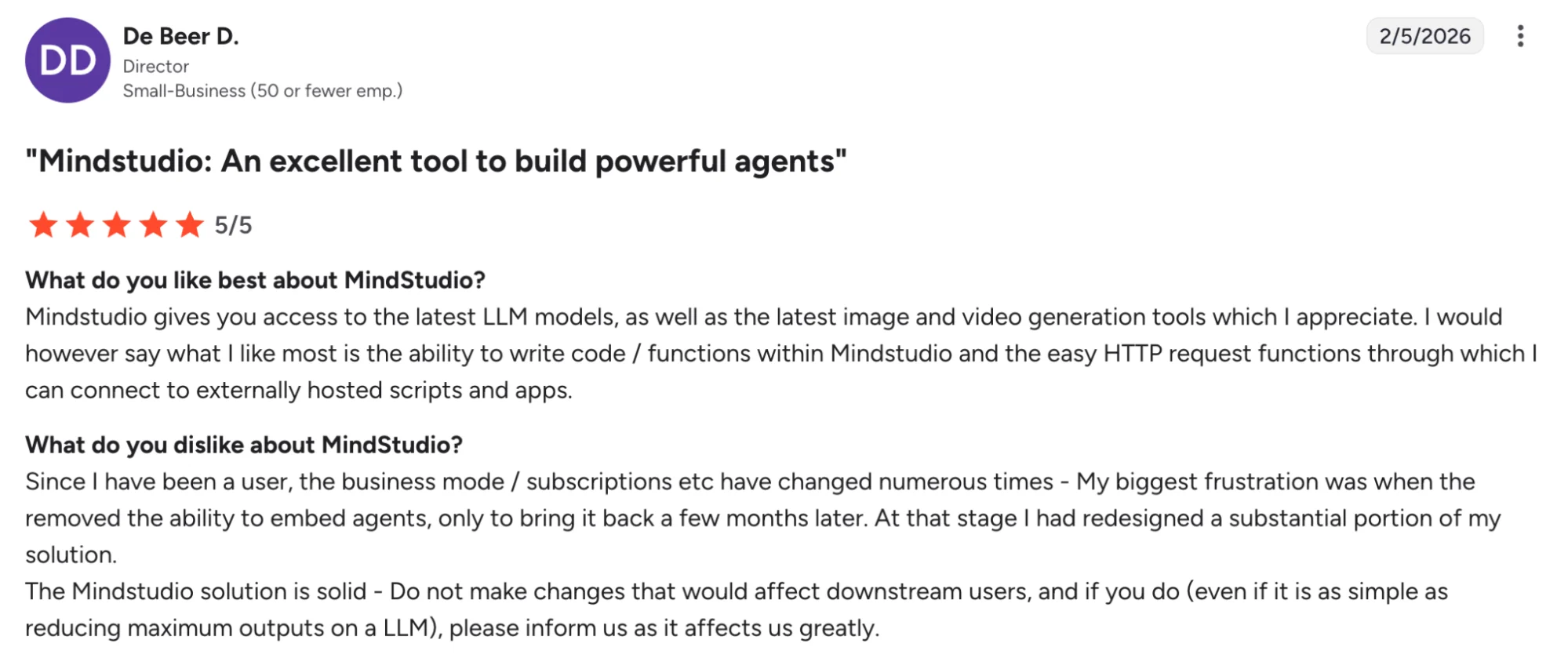
4. MindStudio — Best For Building Custom AI Agents Around Your Distribution Workflow
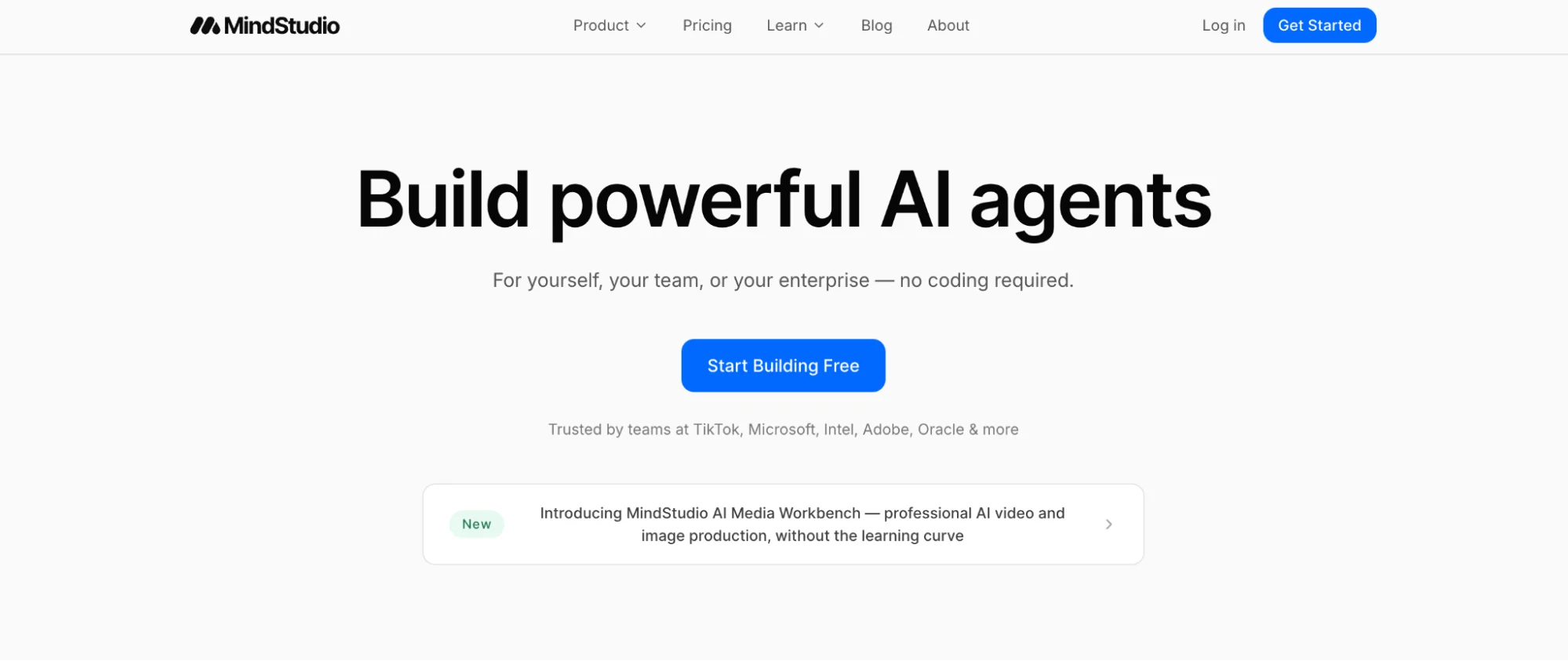
MindStudio fits teams with a clear distribution engine in mind and enough operational depth to shape it.
Rather than giving you one fixed content app, it gives you a no-code environment for building custom AI agents around research, routing, content generation, audience segmentation, and delivery.
For marketing teams with complex content workflows, that opens up more room to design agent workflows around your own systems, your own content strategy, and your own rules for brand voice and human oversight.
MindStudio Is Best For
MindStudio is best for marketing teams, content operations leaders, and growth teams who want custom AI agents for content distribution instead of a packaged workflow.
MindStudio’s Key Features
- No-code builder for custom AI agents and multi-step agent workflows
- Access to 200+ AI models through one platform
- 1,000+ integrations for connecting agents to marketing systems and data sources
- Team workspaces with collaborator controls and permissions
- Flexible deployment options, including custom domains, SSO, audit logs, and self-hosting on Business plans
MindStudio’s Pros
- Intuitive builder keeps agent creation approachable for non-technical teams
- Speeds up prototyping and workflow automation across content operations
- Strong flexibility for custom agents built around specific distribution jobs
- Useful support ecosystem, including workshops, community help, and training resources
MindStudio’s Cons
- Advanced analytics and deeper integrations feel limited in some setups
- The initial learning curve can feel steep once teams move into broader agent design
- Integration work can require extra setup in more complex environments
MindStudio’s Pricing
- Free includes 1 agent and 1,000 runs per month
- Individual starts at $20/month plus usage
- Business uses custom pricing
- AI model usage is billed separately at the pass-through cost
- Best suited to teams buying for custom AI solutions, workflow automation, and agent-led content distribution built around their own stack
5. Relevance AI — Best For Building Multi-Agent Content Distribution Workflows
Relevance AI is a better fit for teams that want an AI-powered workforce rather than a single-purpose writing tool. It gives marketing teams room to build agent workflows around research, routing, audience segmentation, content delivery, and optimization, which makes it useful for larger content operations with moving parts across channels.
When distribution depends on integrations, structured data, and workflow automation more than one-off drafting, Relevance AI starts to look far more compelling than a standard content app.
Relevance AI Is Best For
Relevance AI is best for marketing teams, content operations teams, and GTM teams building custom agents for content distribution across complex marketing systems.
Relevance AI’s Key Features
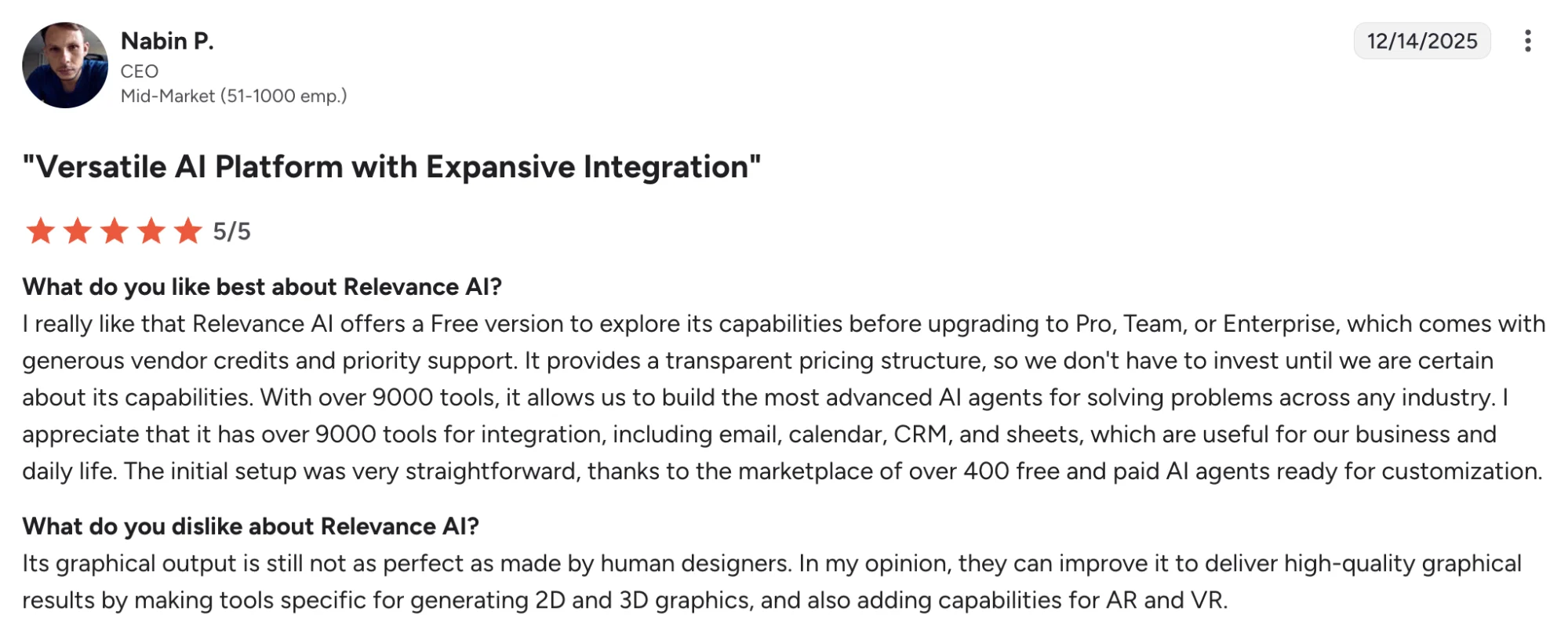
- Multi-agent systems for research, routing, content generation, and delivery
- No-code and low-code builder for custom agents and agent workflows
- 2,000+ integrations for linking agents with data sources and marketing systems
- Scheduling, analytics dashboard, and A/B testing on paid plans
- Bring-your-own LLM support plus Actions and Vendor Credits for flexible usage
Relevance AI’s Pros
- Flexible setup for teams building custom agent workflows around real distribution jobs
- Broad integration depth for content operations spread across several systems
- Useful for automating repetitive routing, research, and delivery work
- Strong support for teams who want more control over how agents run across workflows
Relevance AI’s Cons
- Pricing can get harder to forecast once usage scales
- Onboarding can feel busy during the first setup phase
- Interface depth takes time to get comfortable with
Relevance AI’s Pricing
- A free plan is available
- Pro starts at $19/month and includes 30,000 Actions per year plus $240 vendor credits per year
- Team starts at $234/month and includes 84,000 Actions per year, plus $840 vendor credits per year
- Enterprise uses custom pricing
- Pricing combines plan cost with Actions and Vendor Credits, so total spend rises with heavier usage
6. Salesforce Agentforce — Best For CRM-Native Content Distribution Inside Salesforce
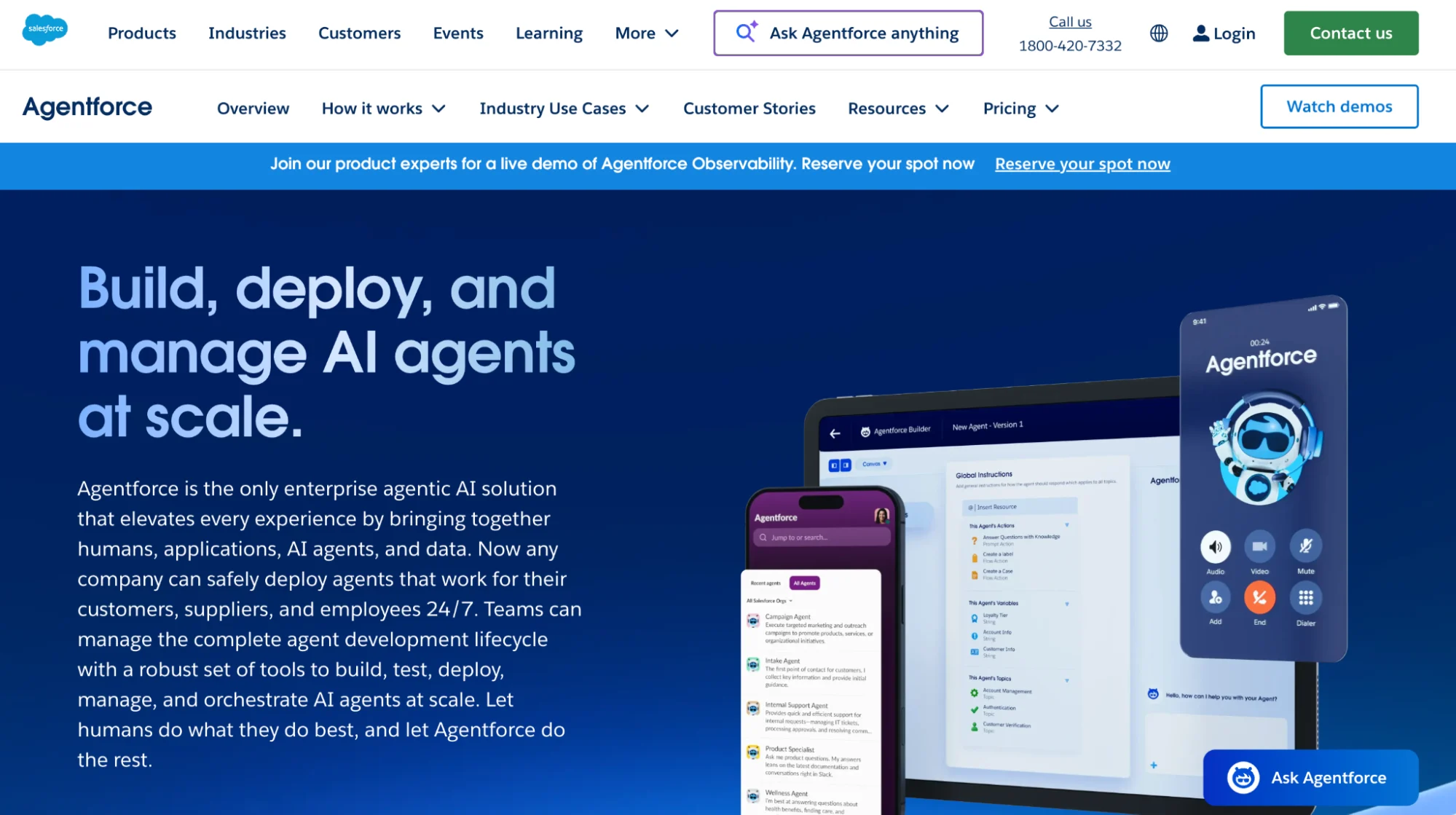
Salesforce Agentforce fits enterprise teams whose content distribution runs through CRM data, audience data, lifecycle programs, and cross-functional workflows. Its strongest appeal comes from context.
Agentforce can work inside Salesforce records, automations, and integrations, which gives marketing teams a way to shape content delivery around real customer signals instead of isolated prompts.
For large organizations balancing audience segments, campaign orchestration, and human oversight, it brings content operations closer to the systems already driving execution.
Salesforce Agentforce Is Best For
Salesforce Agentforce is best for enterprise marketing teams, lifecycle teams, and CRM-heavy organizations using Salesforce as a central operating system.
Salesforce Agentforce’s Key Features
- Native access to Salesforce data, workflows, and automation
- Agent actions across channels and connected systems
- Flexible pricing through Flex Credits, conversations, and per-user licensing
- Grounding through uploaded files and Salesforce context
- Slack and broader Salesforce ecosystem connections for wider agent workflows
Salesforce Agentforce’s Pros
- Deep Salesforce integration keeps content workflows close to customer and audience data
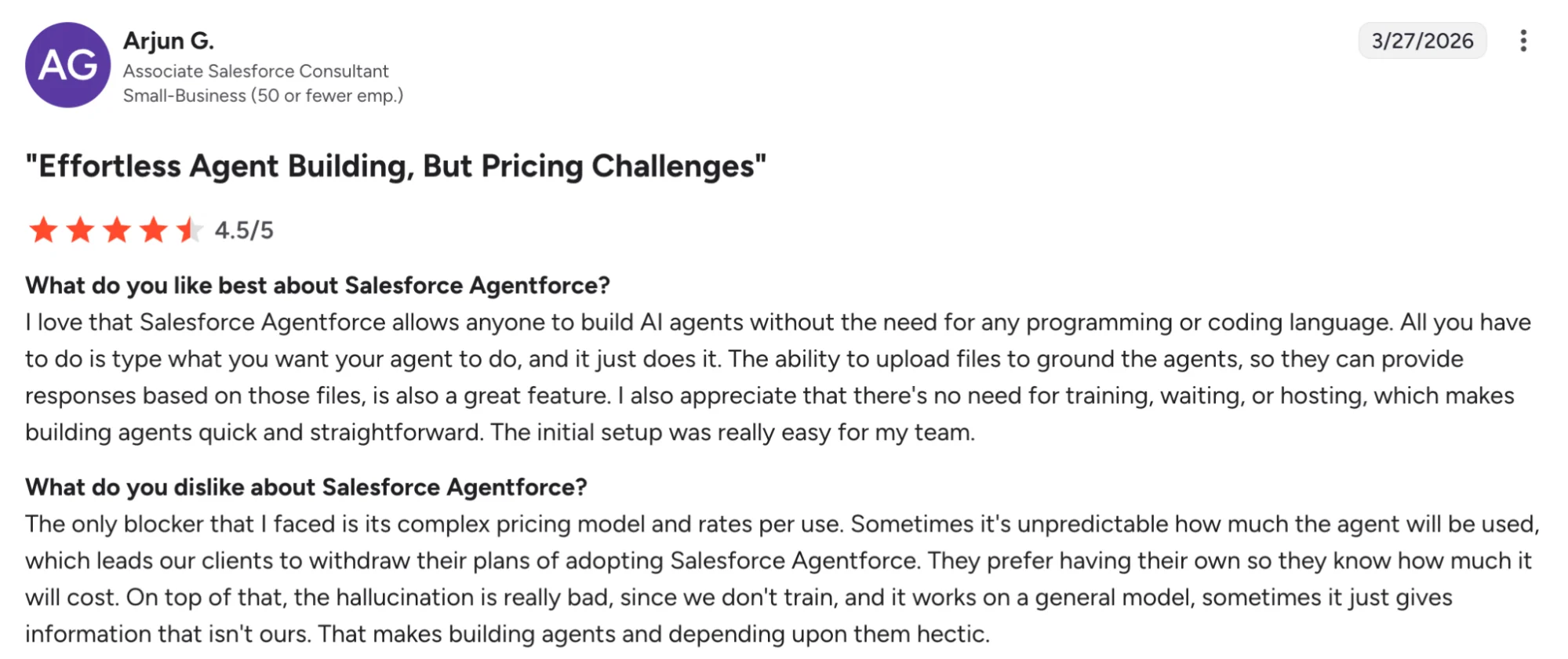
- Easy initial setup for many teams
- Useful for automating actions, record updates, and content-adjacent tasks across systems
- Broad integration options support larger content operations and enterprise workflows
Salesforce Agentforce’s Cons
- The pricing structure feels complex and harder to forecast
- Output quality depends heavily on clean underlying Salesforce data
- Hallucination risk shows up in review feedback
Salesforce Agentforce’s Pricing
- Flex Credits cost $500 per 100,000 credits
- Conversation pricing starts at $2 per conversation
- Per-user licensing is also available for some employee-facing use cases
- Pricing paths vary by deployment model, workflow design, and usage volume
- Best suited to enterprise teams already investing deeply in Salesforce and CRM-native agent workflows
7. Customer.io — Best For Agent-Led Content Delivery Across Lifecycle Messaging
Customer.io brings content distribution closer to the inbox, the app, and the moments users are most likely to respond. Instead of pushing the same message to everyone, teams can use behavior signals, profile data, and lifecycle timing to send content with much better precision.
For brands using email, push, SMS, and in-app messaging as core distribution channels, Customer.io gives content a smarter route to the right audience.
Customer.io Is Best For
Customer.io is best for lifecycle marketers, CRM teams, and content teams who want AI agents for content distribution inside messaging workflows.
Customer.io’s Key Features
- AI Agent with core execution skills on Essentials, plus custom skills on higher tiers
- Visual workflow builder for cross-channel journeys and agent workflows
- Audience tools for profiles, custom objects, nested data, and AI-powered segment building
- Message delivery across email, push, in-app, SMS, webhooks, and more
- Reporting, dashboards, A/B testing, and conversion tracking for continuous improvement
Customer.io’s Pros
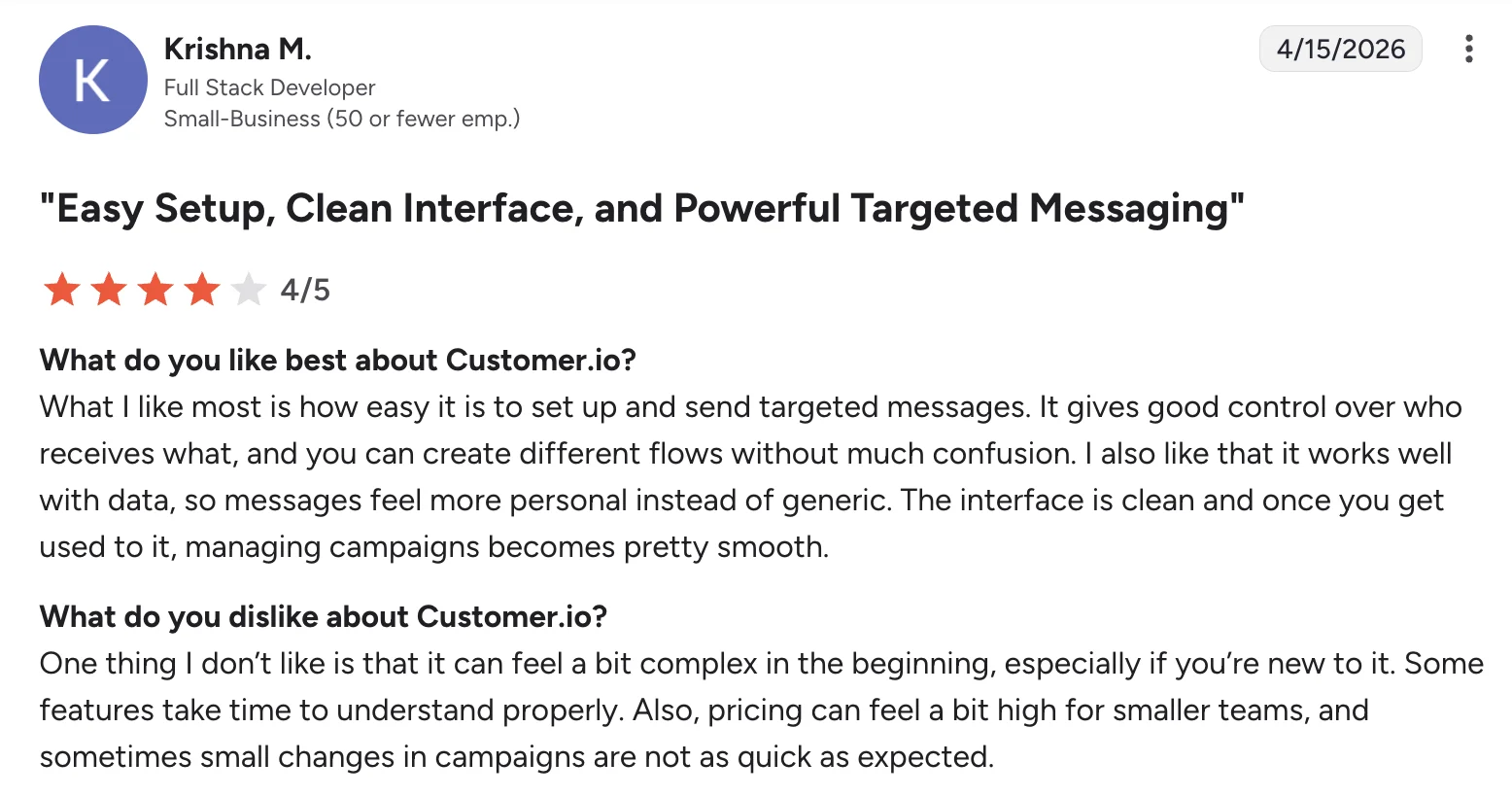
- Clear workflow builder makes complex journeys easier to manage
- Strong support for behavior-based messaging and audience segmentation
- Helpful support and a product experience many teams find easy to work with
Customer.io’s Cons
- The learning curve can feel steep during setup
- Product experience can feel fragmented in places
- Analytics depth leaves some teams wanting more
Customer.io’s Pricing
- Essentials starts at $100/month, billed monthly, for 5,000 profiles
- Premium starts at $1,000/month, billed yearly
- Enterprise uses custom pricing
- Additional profiles cost $0.009 each
- An additional 1,000 emails cost $0.12
- Additional AI credits cost $10 per 100,000
- Best suited to teams buying for lifecycle messaging, audience-based content delivery, and agent-assisted distribution across owned channels
8. Mutiny — Best For Personalized Content Delivery For Target Accounts
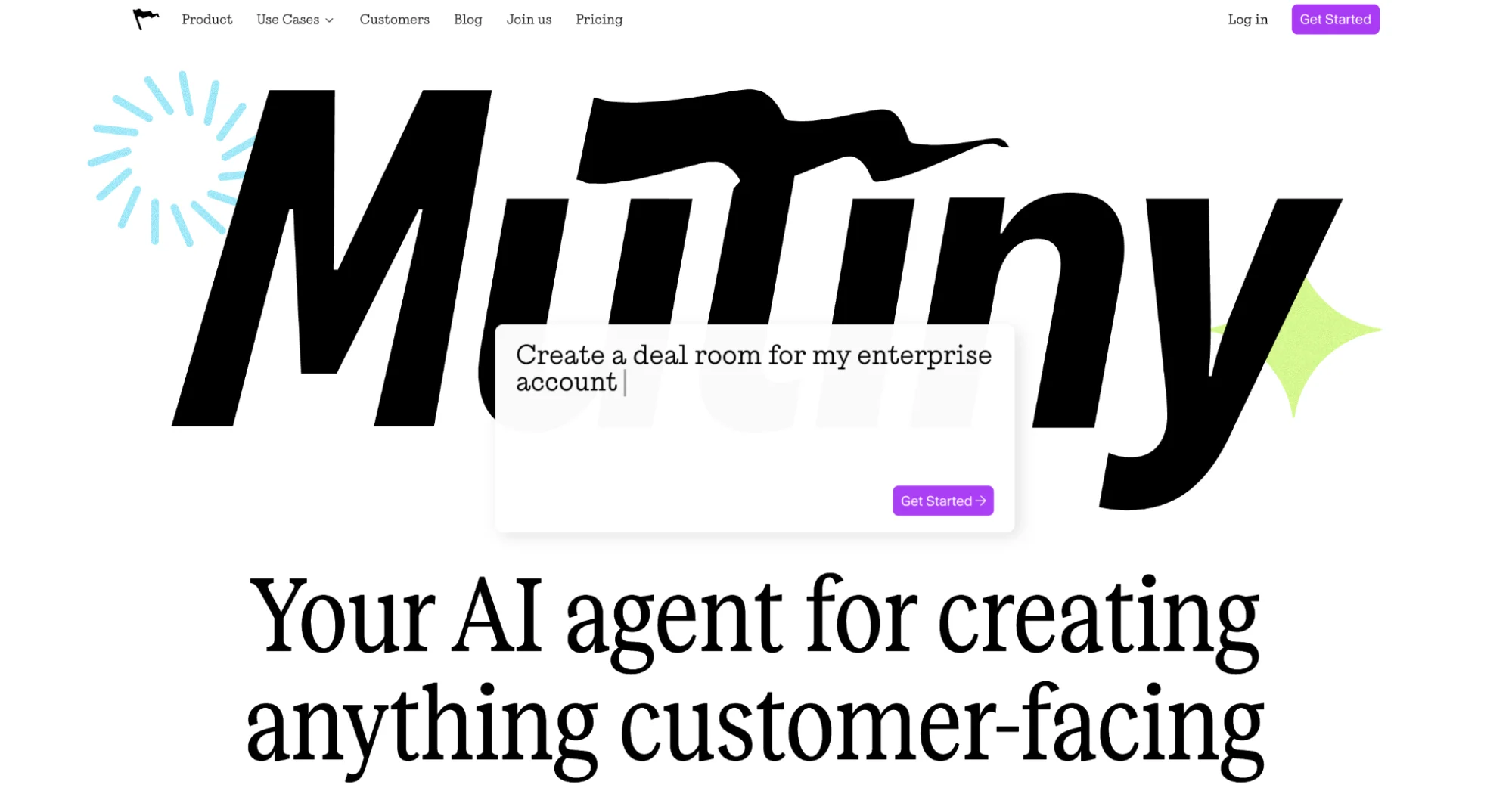
Mutiny enters your workflow once broad distribution stops feeling precise enough. Its strength lies in personalization.
Marketing teams can use visitor intelligence, account context, and brand inputs to create customer-facing assets tailored for a segment, an industry, or a single account.
For ABM programs and demand gen teams, Mutiny gives content distribution a sharper edge than broad channel publishing alone.
Mutiny Is Best For
Mutiny is best for ABM teams, demand gen teams, and B2B marketers who want content delivery tied closely to audience segments, account data, and campaign context.
Mutiny’s Key Features
- Brand-trained content generation based on your website’s voice, look, and feel
- Data-connected personalization for logos, messaging, case studies, and branding
- Customer-facing asset creation for pages, proposals, and sales-facing content
- Template prompts for scaled 1:1 personalization on higher tiers
- Integrations and shared credits for team-based execution
Mutiny’s Pros
- Easy to use for personalized content workflows
- Strong support and onboarding experience
- Useful insights for segment selection and account targeting
- Helps teams create more relevant customer-facing experiences
Mutiny’s Cons
- Price can feel high for tighter budgets
- AI depth feels lighter in some areas
- Integration footprint feels smaller than some buyers expect
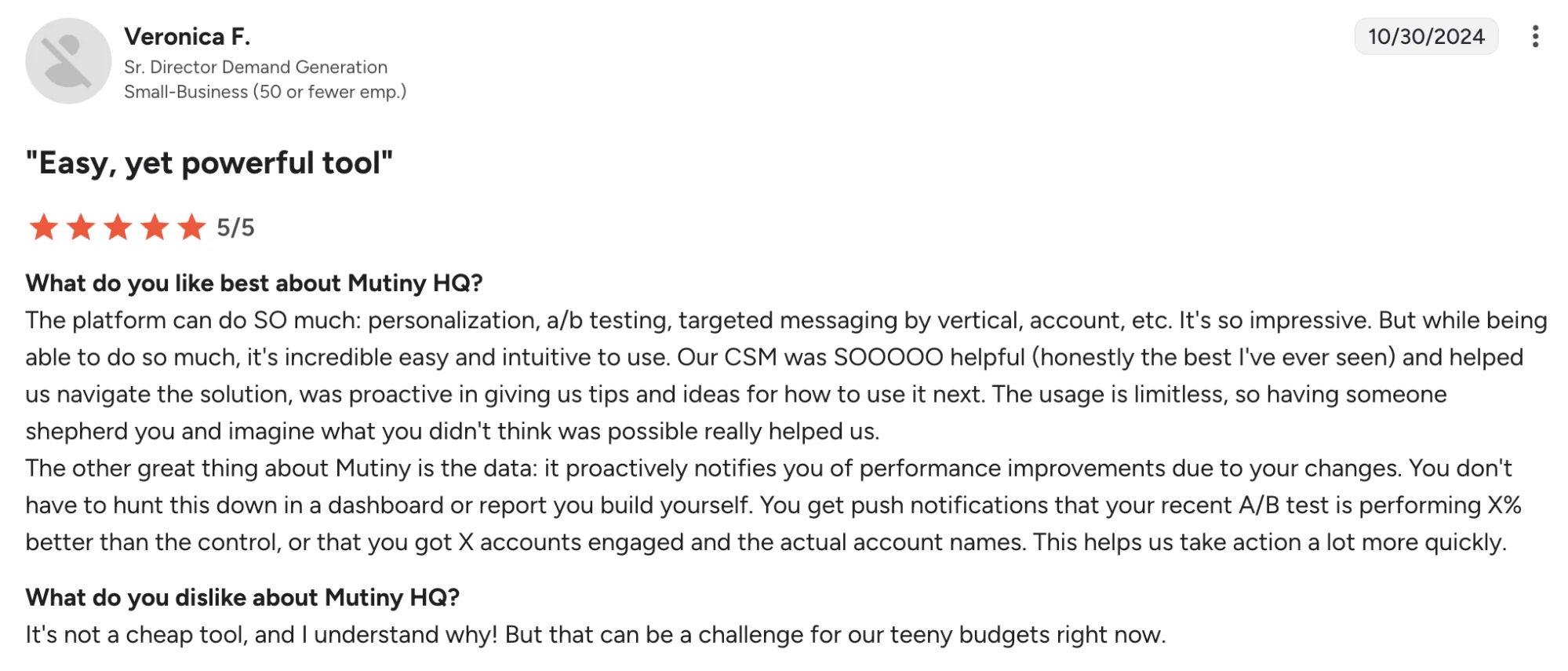
Mutiny’s Pricing
- Free plan starts at $0 and supports up to 5 team members
- Business starts at $50 per user per month
- Enterprise starts at $30,000 per year
- Pricing uses a shared AI credit pool across the team
- Best suited to teams buying for account-level personalization and targeted content delivery
9. Writer — Best For Brand-Safe Content Distribution At Enterprise Scale
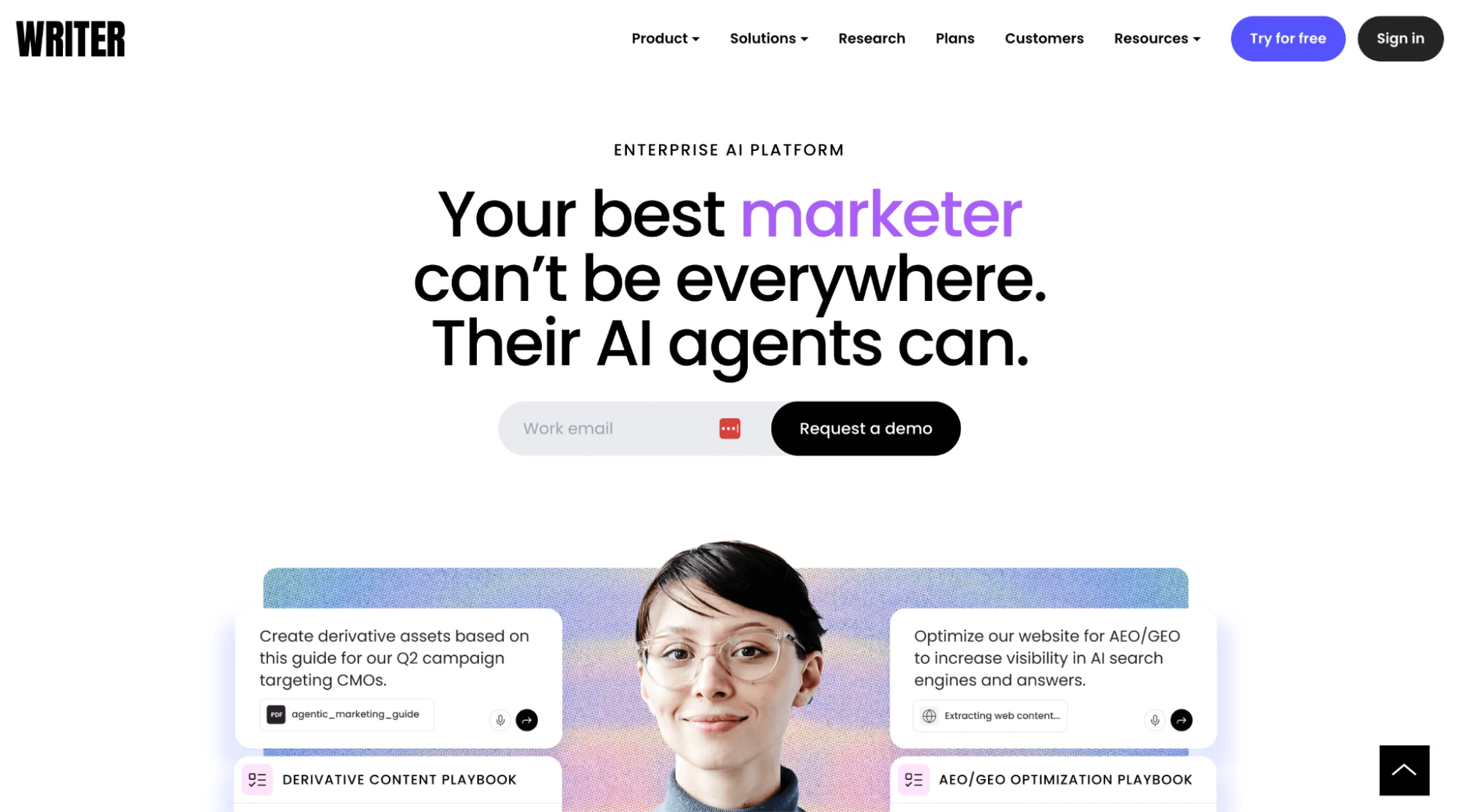
Writer fits teams carrying a large content operation across channels, regions, and stakeholders. Once distribution starts stretching across more systems and more contributors, keeping every asset aligned with brand voice, brand guidelines, and quality standards turns into a serious operational job.
This AI tool brings structure to that layer of work with enterprise guardrails, shared knowledge, and agent workflows built for marketing content creation at scale.
Writer Is Best For
Writer is best for enterprise marketing teams, content teams, and regulated organizations that care deeply about maintaining brand voice, maintaining consistency, and keeping human oversight close to content workflows.
Writer’s Key Features
- Brand guardrails for stronger brand voice consistency across content workflows
- Knowledge graph support for grounding outputs in approved data sources
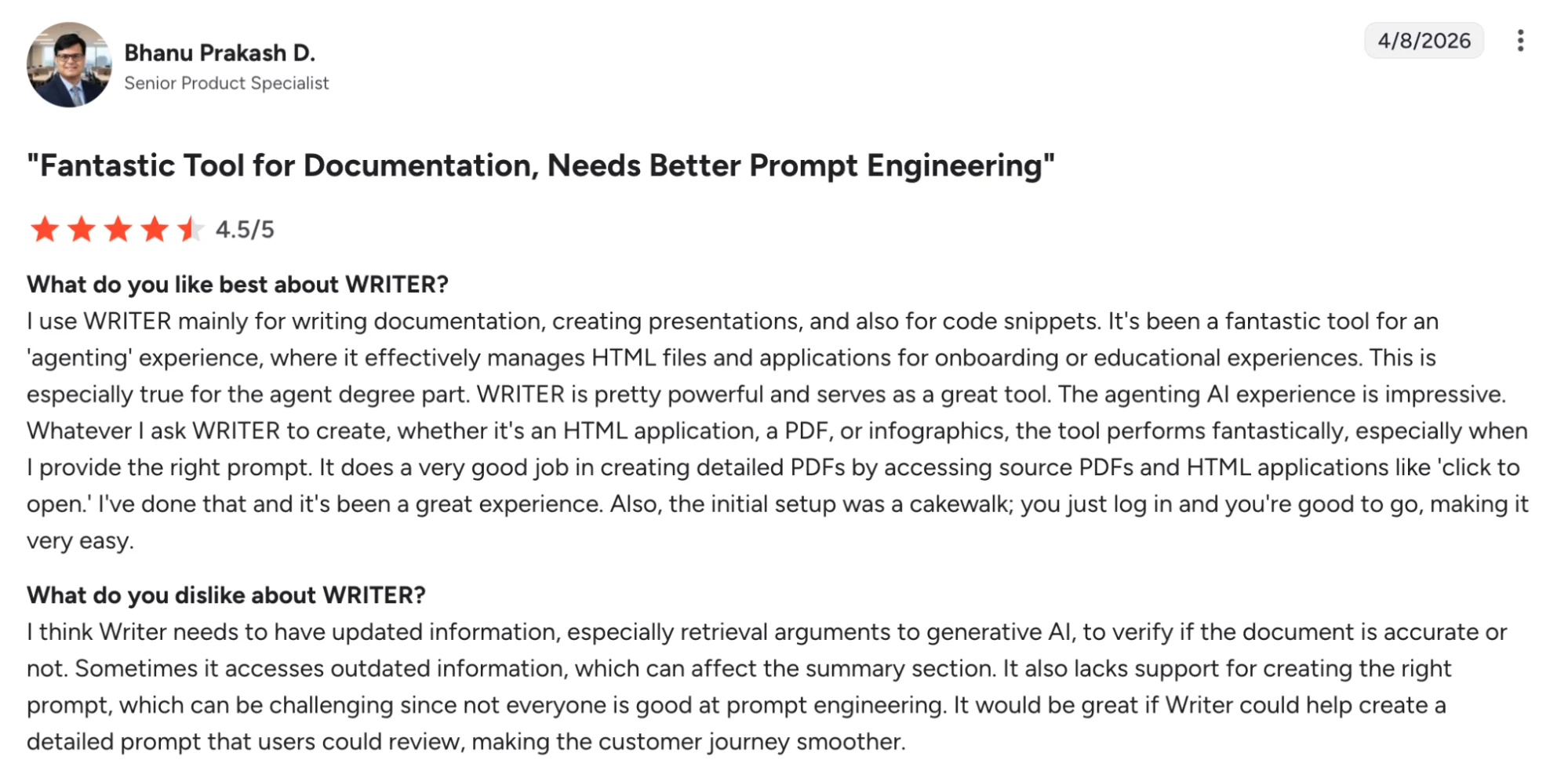
- AI agents and workflow tools for research, drafting, editing, and content delivery
- Enterprise controls for governance, permissions, and secure collaboration
- Support for marketing content creation across social media posts, long-form articles, video scripts, and other content formats
Writer’s Pros
- Keeps brand consistency stronger across large content programs
- Gives marketing teams more control over quality, governance, and approvals
- Helps content operations move faster without losing structure
- Works well for teams managing content creation workflows across many contributors
Writer’s Cons
- Higher-value use case leans toward larger teams with more complex content operations
- Setup can take more planning once governance and integrations expand
- A broader enterprise focus can feel heavy for lean teams
Writer’s Pricing
- A 14-day free trial is available
- Starter starts at $29 per user/month
- Enterprise pricing is sales-led
- AI Studio and broader enterprise usage can shape total spend
- Best suited to teams buying for governance, brand control, and enterprise content distribution across larger workflows
How To Choose The Right AI Agent For Content Distribution
The best choice usually becomes clear once you identify where distribution slows your team most and what kind of control your workflow demands.
1. Start With The Distribution Job Slowing The Team Down
For some teams, the biggest drag sits in turning existing content into more channel-ready assets.
For others, the pressure shows up in personalization, routing, or delivery across owned channels. Once the core job is clear, the shortlist gets much easier to narrow.
2. Separate Content Generation From Content Distribution
Plenty of platforms can generate content. Far fewer can move it through the full distribution workflow.
Look closely at whether the agent supports repurposing, routing, scheduling, personalization, and delivery across multiple platforms, or simply stops after draft creation.
3. Check How Much Context The Agent Can Use
Stronger distribution starts with a stronger context.
Agents with access to audience data, behavioral data, performance history, brand guidelines, and other relevant signals can produce sharper content variations, better audience targeting, and more informed delivery decisions across channels.
4. Match The Platform To Your Team Structure
Lean teams usually value speed, simplicity, and quick rollout.
Larger marketing organizations often care more about approvals, governance, integrations, and brand control across regions or business units. The right level of complexity should match the way your team already operates.
5. Look At The Type Of Distribution It Handles Best
Some platforms shine when repurposing blogs, podcasts, and videos into distribution assets.
Others are better suited to lifecycle messaging, account-based personalization, or CRM-native execution. The right tool should line up with the channels, formats, and distribution motion your team relies on most.
6. Evaluate Brand Control And Human Oversight
Speed helps, though quality and consistency still carry more weight over time.
Strong AI agents for content distribution should support brand voice, brand guidelines, review layers, and human oversight so content operations can scale without losing control or strategic judgment.
7. Choose A Pricing Model That Fits How You Scale
Pricing can shift quickly once content volume, contributors, or usage expands.
Some tools charge by seat, some by credits, some by workflow volume, and some through custom packaging.
The better buying decision usually comes from matching the pricing model to the way your team plans to grow.
Which Tool Would You Choose?
Some teams need custom agent infrastructure. Others need enterprise governance, CRM-native execution, or lifecycle orchestration. Those platforms make more sense in larger operating environments where content distribution sits inside a broader system.
Distribution.ai is the stronger choice when content distribution is the main priority. It helps marketing teams turn existing blogs, podcasts, and videos into channel-ready assets built for publishing across multiple platforms, rather than stopping at draft generation.
For content teams trying to get more output from existing content, maintain a steadier brand voice across channels, and create a tighter link between repurposing, scheduling, distribution, and analytics, Distribution.ai offers one of the most practical options in this list.
It is built for teams that want less workflow drag, more usable assets, and a faster path from source content to live distribution.
Frequently Asked Questions
1. What Is The Difference Between AI Agents And Generic AI Tools For Content Distribution?
AI agents for content distribution work with audience data, performance data, brand guidelines, and workflow rules.
Generic AI tools usually focus on one prompt at a time. AI agents support content workflows, content delivery, and continuous improvement across multiple platforms with stronger context.
2. Can AI Agents Help Maintain Brand Voice Across Multiple Content Formats?
Yes. Many AI content agents use brand voice rules, approved messaging, and structured data to keep social media posts, long-form articles, video scripts, and other assets aligned.
This makes maintaining brand voice and brand consistency easier across content creation workflows.
3. Do AI Agents For Content Distribution Replace Human Teams?
AI agents support marketing teams by speeding up research, content generation, workflow automation, and delivery. Human oversight still plays a central role in brand judgment, approvals, quality review, and strategic decisions.
Strong results usually come from agent workflows paired with active editorial control.
4. Which Teams Get The Most Value From AI Agents For Content Distribution?
Content teams, social media managers, demand gen teams, lifecycle teams, and larger marketing teams often get the most value.
The biggest gains show up in content operations with multiple platforms, audience segments, repeatable workflows, and a steady stream of existing content ready for distribution.
5. Can AI Agents Use Performance Data To Improve Future Content Distribution?
Yes. Many platforms can read audience engagement, content performance history, behavioral data, and other relevant data sources to guide future content variations and delivery choices.
This helps marketing teams improve targeting, refine content strategy, and build stronger distribution systems over time.
Promote, repurpose & distribute your content with AI
Write 10x faster, engage your audience, & never struggle with the blank page again.
Start 15-Day Free Trial
Frequently Asked Questions
Author

Promote, repurpose & distribute your content with AI
Start 15-Day Free Trial