User-Generated Content (UGC): What It Is + Why It Matters in 2026
Learn what user-generated content (UGC) is, why it builds trust, and how to collect, repurpose, and distribute it on socials to drive conversions.

User-generated content (UGC) is one of the fastest ways to build trust and drive action because it comes from real customers.
In 2026, as attention gets more expensive and audiences more skeptical, UGC helps you stand out across social, ads, email, and product pages.
This guide breaks down what UGC is, why it matters, and how to use it to move people from interest to purchase.
What UGC Actually Is (And What It Is Not)
UGC (user generated content) is content created by real customers, not your brand.
It can be raw or polished. It can be intentional or spontaneous. What makes it valuable is that it sounds like how people actually talk about their experience.
UGC is not influencer marketing. It is not brand-created or scripted content. It is authentic content shared by users on social media platforms, communities, and review sites. That authenticity becomes social proof that influences purchasing decisions.
Core UGC Formats
UGC content commonly includes:
- Online reviews and positive reviews
- Customer photos and videos posted on social media channels
- How-to videos and product walkthroughs recorded by users
- Screenshots of results, dashboards, or outcomes
- Reddit threads, G2 discussions, and Q&A posts in niche forums
- Before-and-after transformations
- Template shares inside communities
In B2B, user generated content UGC often looks like:
- Social media posts on LinkedIn explaining how someone uses your product
- A Loom walkthrough made for a team and shared publicly
- Community thread comparing tools and recommending yours
- A step-by-step guide written after your product solved a problem
This user content is an invaluable resource for content creation.
You can identify content like this, request permission, and share user generated content across your own channels as part of your ugc strategy and broader marketing efforts.
Why User Generated Content Matters In 2026
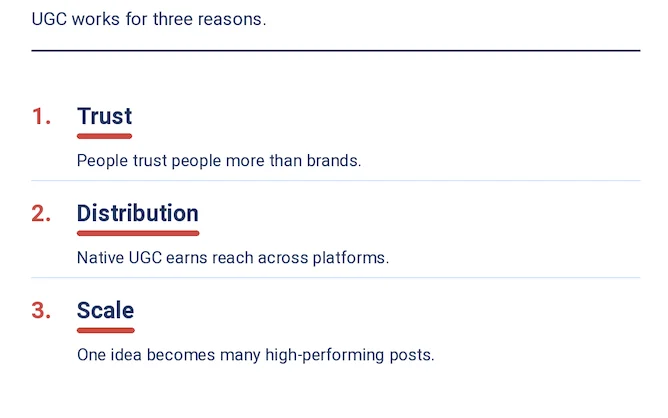
UGC works for three reasons: trust, distribution, and scale. And all three are becoming stronger every month.
1. UGC Has Become the Default Trust Layer
According to G2, 31% of software buyers read UGC reviews before considering a tool. In 2026, UGC is the trust shortcut.
Potential customers rely on user generated content like online reviews, customer photos, and social media posts because it feels like authentic content from real customers, not branded content.
That social proof shows up everywhere people make purchasing decisions, from product pages to social media platforms.
If your brand is missing from this user content across key social media channels and review spaces, your marketing efforts lose visibility and credibility.
2. UGC Drives Higher Conversion and Deeper Engagement
UGC marketing often outperforms traditional marketing because it lowers doubt.
When potential customers see authentic content from real customers, it feels more believable than branded content, even when both say the same thing.
That’s why user generated content like customer photos, online reviews, and short visual content tends to boost engagement across social media platforms and social media channels.
It also improves conversion rates on product pages, where customer feedback and social proof directly shape purchasing decisions.
3. UGC Helps You Scale Content Faster Than a Traditional Team Can
Content creation is a slow process in general. Reviews take time, production costs add up, and getting high quality content out the door can turn into a bottleneck.
This is where UGC becomes a real growth lever. Your users create content at a volume your team cannot match, from customer photos and short videos to product walkthroughs and customer feedback.
The bigger issue is not creating UGC. It is having a system to identify content, repurpose it into engaging content, and distribute it across your social media channels and other marketing channels.
That is exactly why tools like Distribution.ai come into play.
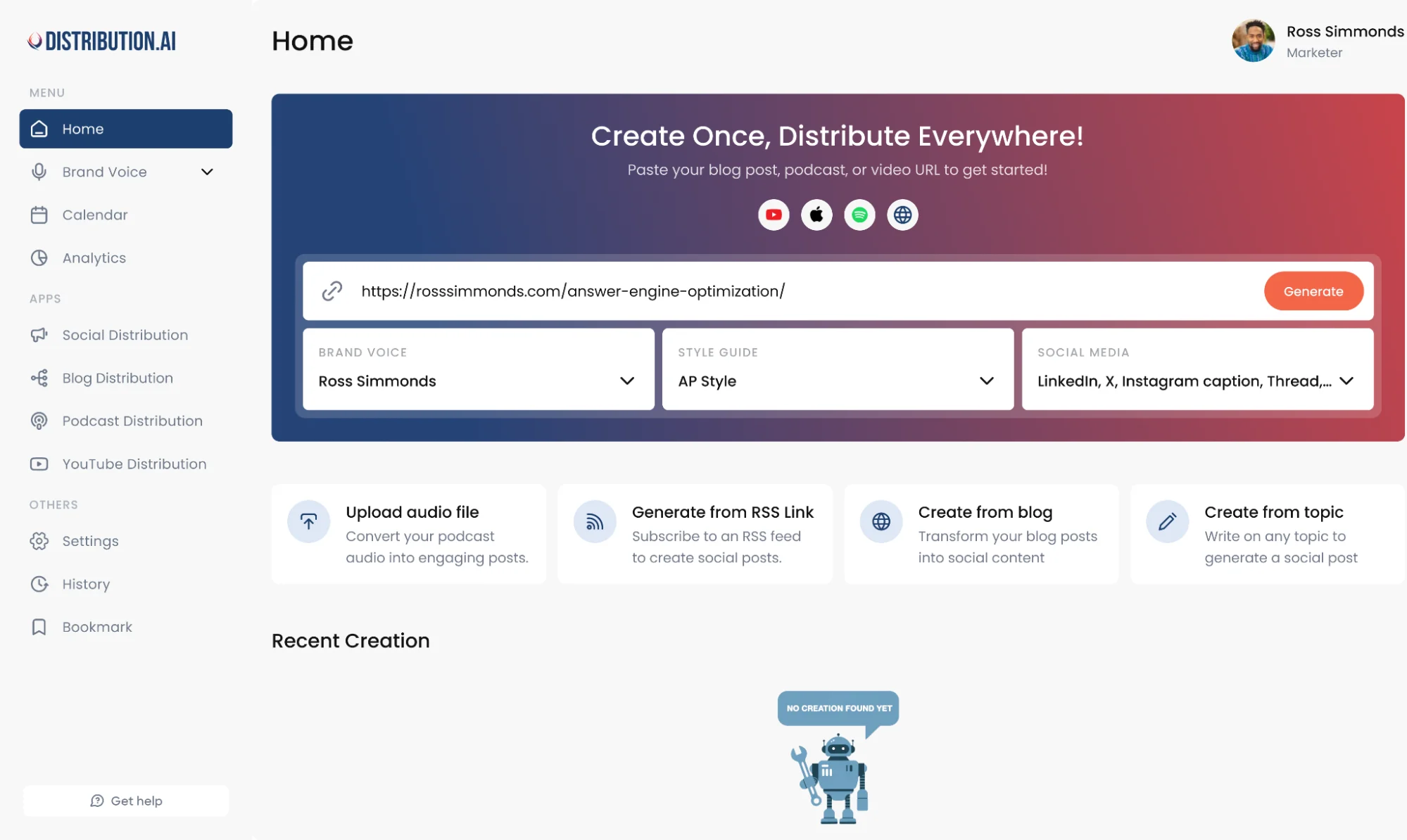
When you take raw user generated content and run it through an AI-powered repurposing workflow, one user’s 30-second clip can turn into:
- 6 social posts
- 12 caption variations
- 2 short form videos
- A testimonial block
- A paragraph for a landing page
- A quote card for LinkedIn

With the right UGC strategy, user content becomes the source material for your content engine. Distribution AI becomes the workflow that helps you scale marketing efforts without scaling headcount.
4. UGC Reflects the Buyer Language You Cannot Invent
There is no copywriting shortcut more powerful than the words real customers use.
User generated content (UGC) captures that language naturally, and it often lands harder than branded content or traditional marketing.
UGC reveals:
- The pain points they feel (in their words)
- The objections they mention before purchasing decisions
- The phrases they repeat in online reviews and customer feedback
- The use cases they care about across the customer journey
- The emotional triggers behind shopper behavior
You can spot this user content in product pages, Reddit threads, G2, and Capterra.
Many teams now treat UGC content as qualitative research, then reuse the best lines in social media posts, marketing campaigns, and other marketing channels as part of an own UGC strategy that builds brand authenticity and social proof.
5. UGC Fuels GEO (Generative Engine Optimization)
Search is changing fast. AI answers increasingly pull from Reddit threads, community discussions, online reviews, and other user content. In 2026, user generated content (UGC) is the raw material these systems trust because it reflects authentic content from real customers, not branded content.
A GEO-ready content strategy needs more visibility in the places people already ask questions.
UGC gives you that surface area across social media platforms, social channels, and review spaces, especially when you identify content worth amplifying and share user generated content across your own channels.
How to build an effective UGC content strategy
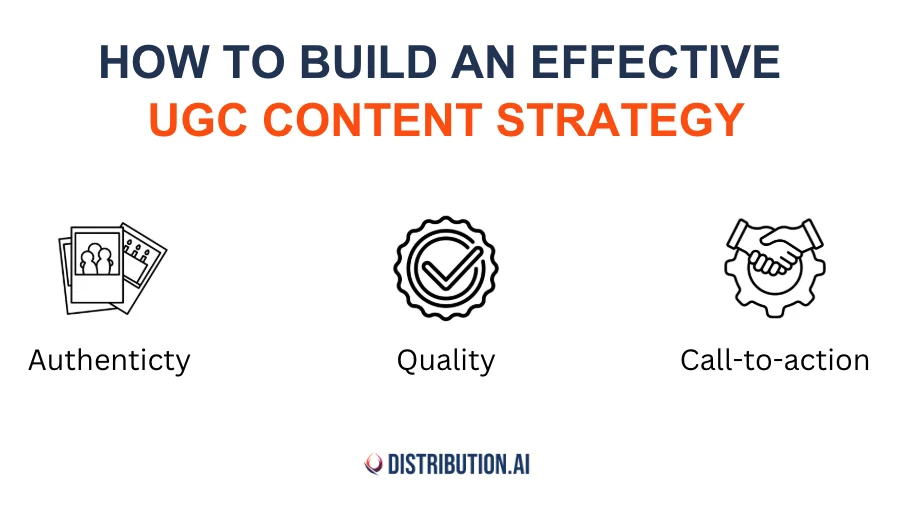
User generated content is only powerful when you treat it like a system.
High-performing brands know how to create content loops that encourage customers to post content, then turn that authentic content into repeatable marketing assets.
Below are proven UGC formats and simple ways to create them.
1. Show Real Before and After Transformations
Nothing communicates impact faster than a clear change.
Before-and-after UGC works because it makes the value obvious in seconds, which is why it performs well as visual content on social media channels like TikTok, Reels, YouTube Shorts, and LinkedIn. It also repurposes cleanly into social media posts, emails, and product pages.
How to create it
- Ask users to show “before” (their old setup or problem), then “after” with your product in place
- Use prompts like: “Show the problem, then show how you solve it now”
- Keep it short for short form videos (ideally under 15 seconds)
Example
Notion templates shared by real customers often take off because they show messy workflows turning into clean dashboards.
2. Record Unfiltered Product Walkthroughs
The most trusted UGC is simple and real.
It is not polished like influencer marketing or edited like an ad.
Buyers want to see the product the way they will actually experience it, which is why this kind of user generated content performs so well across social media platforms and product pages.
How to create it
- Ask users to record their screen for 30–60 seconds and walk through one specific feature
- Encourage them to talk naturally, using their own words, instead of reading a script
- Use prompts like: “Walk through your favorite feature and explain why it matters to you”
Example
Figma users often share user content like community-made design kits.
These videos work because they feel like authentic content from real customers, and they turn into engaging social media posts you can repurpose across your social media channels (with request permission from the original creator).
3. Capture Reaction Videos and First Impressions
Reaction clips are one of the fastest ways to create authentic content that people actually watch. They work because the emotion is real, so the social proof feels earned.
This is the kind of UGC content that boosts engagement on social media platforms and can lift conversion rates when reused in marketing campaigns.
How to create it
- Ask customers to record a short reaction when they try your product, unlock a feature, or get a result
- Tell them not to “perform” or polish it. The raw customer content is the point
- Keep it tight so it works as short form videos for social media channels
Works best for
- SaaS onboarding
- AI tools
- Analytics dashboards
- Automation workflows
4. Use Customer Testimonials With Specific Details
Generic testimonials rarely convert. The customer testimonials that work sound like real customer content: a clear use case, a specific outcome, and the context behind it.
That level of detail builds social proof and brand authenticity for potential customers.
How to create it
Ask structured questions:
- What problem were you trying to solve?
- What changed after using the product?
- What result did you achieve?
- Who is this best for?
Example
G2 and Capterra reviews win because they focus on specifics. Those details influence purchasing decisions and can lift conversion rates on product pages and across marketing channels (after you request permission from the original creator).
5. Encourage Community How-To Videos and Mini Tutorials
Some of the most valuable UGC for SaaS is educational. Quick tutorials and community how-tos create high quality content that helps prospective customers and existing customers learn faster, while building social proof through real customer workflows.
How to create it
- Run a simple prompt or contest: “Record a 30-second video showing your favorite tip”
- Encourage users to teach each other inside your community and social channels
- Feature the best clips on your own channels and social media platforms (and request permission from the original creator)
Users who make tutorials often become brand advocates. This user generated content also turns into evergreen assets for onboarding, FAQs, product pages, and sales enablement.
6. Ask for Screenshots of Wins, Dashboards, or Results
Screenshots are one of the easiest UGC formats to collect.
They are fast for customers to create, and they make great visual content you can reuse across social media posts, product pages, and other marketing channels as part of your UGC strategy.
How to create it
Prompt users to share:
- A KPI they improved
- A workflow they automated
- A chart they are proud of
- A system they built using your product
These small wins turn into powerful social proof, especially when you pair them with a sentence of customer feedback from real customers (and request permission before you share user generated content).
7. Source UGC From Reddit, Slack Communities, and Niche Forums
Some of the strongest user generated content lives where customers already talk.
Reddit threads, Slack communities, and niche forums are packed with user content that feels more credible than branded content because it captures honest buyer language, real comparisons, and real recommendations.
To turn this into UGC marketing, track brand related content, identify content worth repurposing, then request permission and credit the original creator.
From there, you can turn high-signal threads into quote cards, carousel social posts, and customer testimonials to share user generated content across your own channels and social media platforms.
Slack communities and Reddit are becoming two of the biggest drivers of UGC quality. They are also increasingly surfaced in search results.
8. Let Customers Create Templates, Workflows, or Tools
This is UGC with real utility. When existing customers create something other people can copy, your product becomes easier to adopt and harder to replace.
It also builds brand loyalty because the customer content keeps delivering value long after the first post.
How to create it
- Encourage customers to share templates or workflows they built using your product
- Create a simple “template library” on your product pages or resources hub to organize this user generated content
- Feature the best creations on your social media channels and other own channels (and request permission from the original creator)
Example
Notion’s growth is often tied to user generated templates, where users create content that attracts prospective customers and fuels ongoing customer engagement.
9. Use Interview-Style UGC For B2B Buyers
Interview-style user generated content works well in B2B because it keeps the tone professional while still feeling like authentic content from real customers.
It is a strong form of social proof for prospective customers, and it creates high quality content you can reuse across marketing channels.
How to create it
- Ask customers three fast questions on a short Zoom call to capture clear customer feedback
- Clip each answer into its own short form video for social media platforms
- Share the clips as social media posts across LinkedIn, YouTube Shorts, and your own channels (request permission and credit the original creator)
These clips combine the trust of UGC with the clarity of structured messaging, which can improve customer engagement and support conversion rates.
10. Ask For Simple Voiceovers Paired With Screenshots
Not everyone wants to record their face, and that is fine.
A quick voiceover paired with screenshots is an easy way to create UGC that still feels like authentic content from real customers.
It also produces clean visual content you can reuse across social media platforms, product pages, and other marketing channels.
How to create it
- Request 2–3 screenshots of a workflow, dashboard, or result
- Ask the user to record a short voiceover explaining what is happening
- Combine them into a short clip for social posts and short form videos
This format works especially well for AI tools, automation workflows, SaaS dashboards, and technical products because it turns customer content into clear, engaging content without heavy content creation effort.
UGC Rights Management: How To Request Permission And Credit Creators
UGC marketing only works long-term if you treat creators fairly. That starts with request permission and clear credit.
It protects brand authenticity, keeps customer engagement high, and makes it safe to share user generated content across social media platforms, product pages, and other marketing channels.
When You Need Permission (And When You Don’t)
If you want to reuse customer content outside the original post, get permission first.
This applies when you plan to repost user generated content on your own channels, feature it on product pages, include it in marketing campaigns, or turn it into paid content.
Even if a customer tags you or uses a branded hashtag, it is still safer to ask before you repurpose it.
How To Request Permission Without Killing The Vibe
Keep the ask simple and specific.
Mention what you want to use, where it will appear (social media posts, ads, product pages, or email), and whether it will be edited. If it is paid UGC, say so upfront.
Then make approval easy with a clear “reply yes” consent.
How To Credit The Original Creator
Whenever possible, credit the original creator by tagging their social accounts or naming them in the caption.
If you use the asset off-platform (like landing pages or email), add a short credit line near the content.
This keeps the social proof intact and reinforces that the content came from real customers.
Store Approvals So Your UGC Strategy Can Scale
If you are integrating UGC across multiple marketing efforts, keep a simple log of approvals.
Track the asset link, the creator, where you can use it (social channels, product pages, ads), and whether there is an end date.
This helps you avoid takedowns later and keeps your content creation process clean as you scale.
How To Collect UGC Without Hurting Brand Authenticity
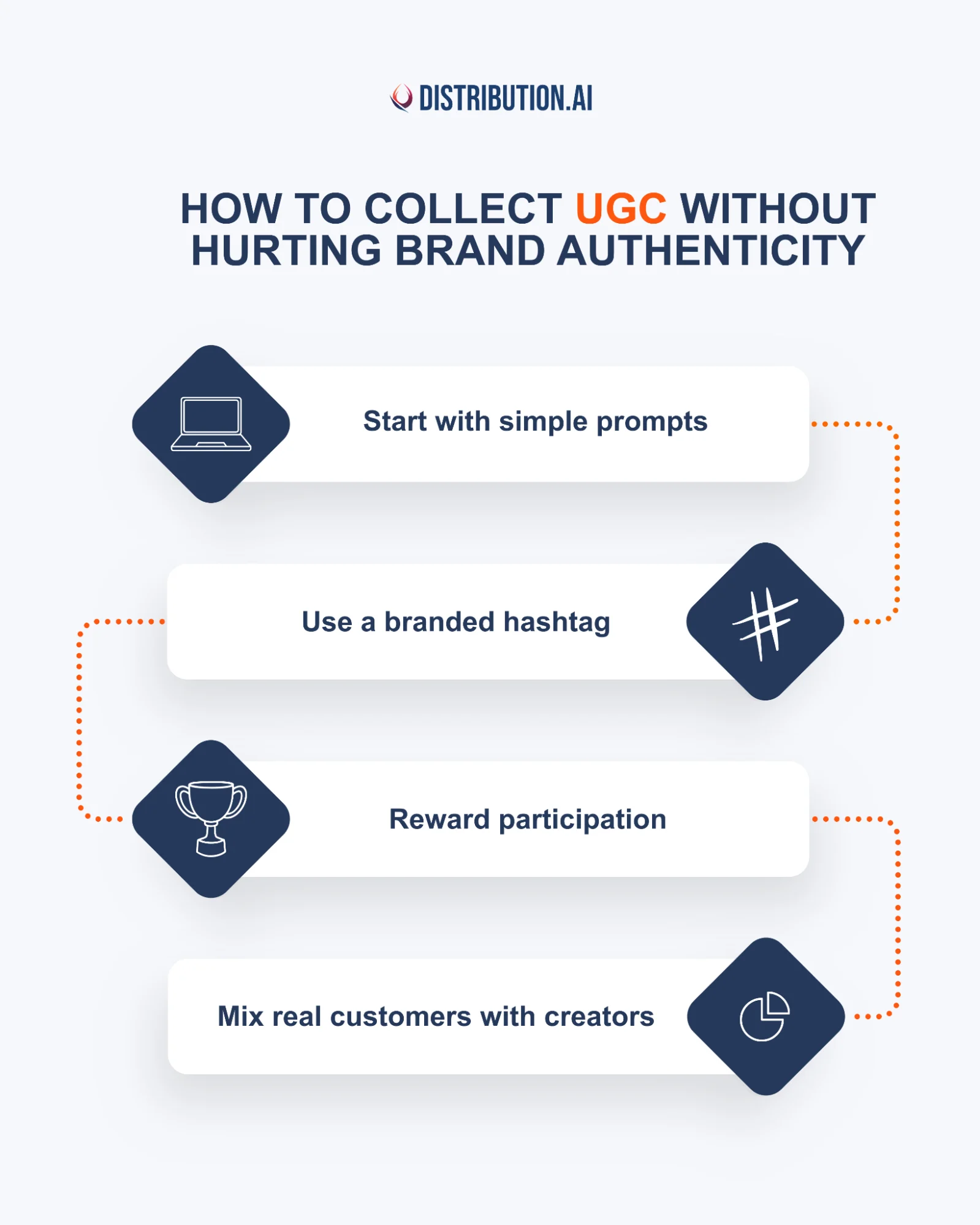
The goal is to encourage customers to create content without making it feel staged.
The best UGC strategy keeps things organic content-first, then adds light structure so people know what to post.
1. Start With Simple Prompts
Most users want direction. Give them prompts that feel natural and specific, like what they tried, what changed, and what they would tell a friend.
This usually produces more authentic content than “share your thoughts” posts, and it works across social media platforms and social media channels.
2. Use A Branded Hashtag
A branded hashtag helps you find and identify content, but it won’t create UGC on its own.
Pair it with a clear callout in your social media posts, onboarding emails, and product pages so existing customers actually see it and use it.
3. Reward Participation Without Turning It Into Paid Content
A loyalty program or social reward can help, as long as it feels like a thank-you, not a transaction.
Early access, swag, feature highlights, or community perks usually keep customer content feeling real while still boosting customer engagement.
4. Mix Real Customers With UGC Creators Carefully
Existing customers bring the strongest social proof.
UGC creators can help you scale content creation for campaigns, but keep the format consistent with real customer voice and avoid over-polished branded content.
If it starts to look like influencer marketing, brand authenticity drops.
The Secret to Strong UGC: Make It Easy
Most users don’t post because there’s too much friction. Reduce the effort, and UGC becomes far more consistent.
Here’s what works:
- Give prompts that make it obvious what to film or write
- Show 2–3 examples so the format is clear
- Offer templates so users can create content faster
- Share a simple 3-step guide they can follow in minutes
- Accept raw, authentic content instead of over-produced videos
- Do the trimming and formatting on your side
- Thank people and feature them on your own channels
UGC scales when customers feel like collaborators, not performers.
UGC Is The Trust Advantage In 2026
User generated content is how buyers decide what to trust.
Real customer content, from online reviews and customer photos to walkthroughs and community posts, lands harder than polished branded content.
The brands that win treat UGC like a system. They encourage customers to create content, request permission, credit the original creator, and reuse the best UGC content across social media channels, product pages, and other marketing channels.
In 2026, trust and visibility go together. Build your own UGC strategy now, and you will earn both.
Promote, repurpose & distribute your content with AI
Write 10x faster, engage your audience, & never struggle with the blank page again.
Start 15-Day Free Trial
Frequently Asked Questions
Author

Promote, repurpose & distribute your content with AI
Start 15-Day Free Trial