Repurposing Content for Social Media: A Practical Workflow for 2026
Discover a simple workflow to repurpose content for social media and create posts, videos and visuals without starting from scratch every time.
Most brands already have the raw material for great social media posts.
It’s sitting in their existing content, like blog posts, long form content, podcasts, and video content.
The problem is turning that into social-ready assets across different platforms seems to take a lot of effort.
This guide shows you a simple content repurposing strategy for repurposing content for social media, so you can repurpose any content into social posts without rewriting everything from scratch.
Read on!
But, Why Repurpose Content for Social Media?
Because starting from scratch every time is a losing game.
You already have existing content that took real effort to create.
A detailed blog post, a research report, a long-form YouTube video, a podcast episode, a slide deck. That stuff is packed with valuable content, key insights, and key messages.
Letting it live in one place only is basically leaving a reach on the table.
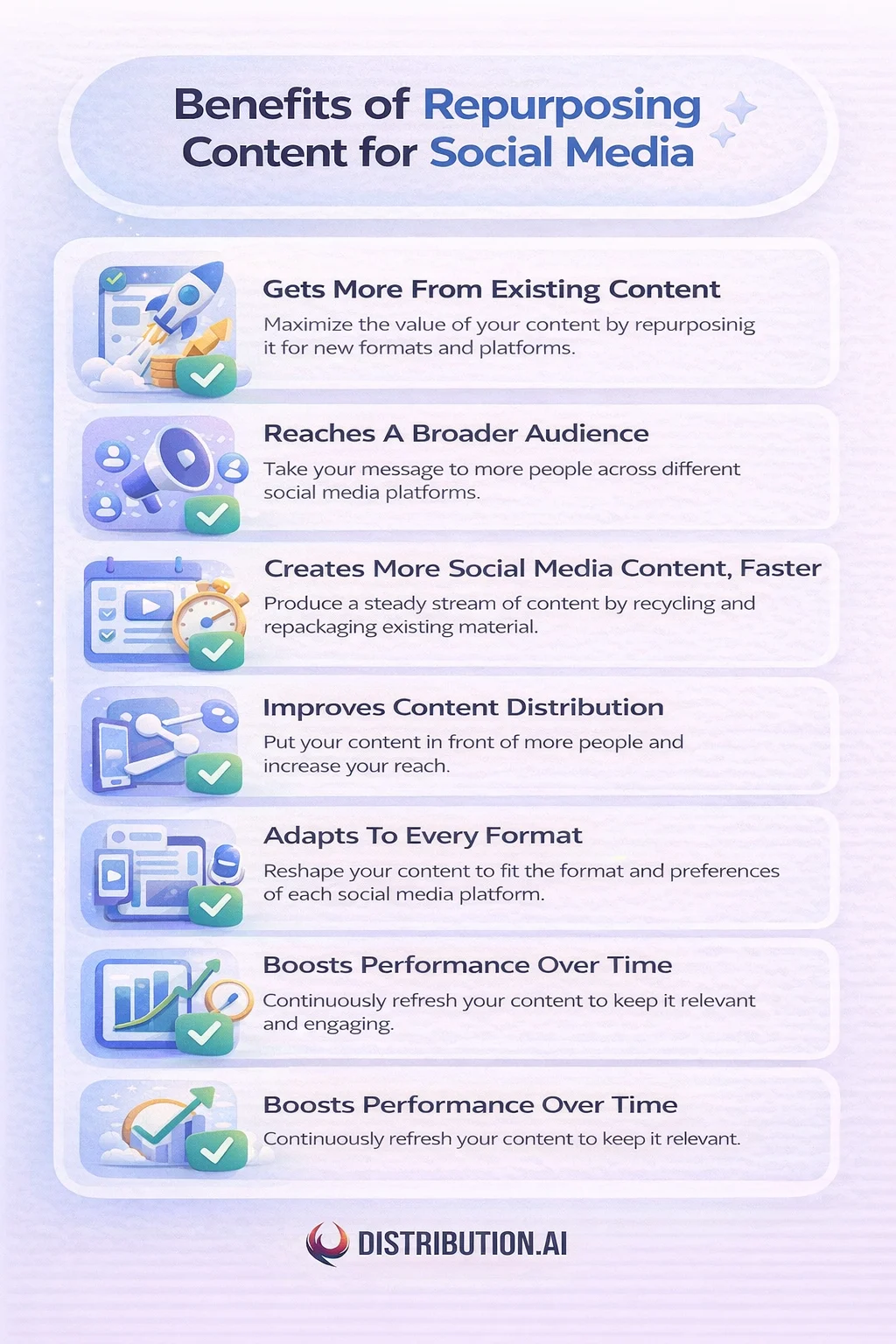
Repurposing content for social media fixes that in a very practical way.
1. First, it gives your best ideas more than one shot.
One strong piece of long form content can turn into multiple social media posts, a LinkedIn post, a few social media snippets, some visual assets like static images, and even a couple of short form videos built around the key moments. Same topic, different formats, posted across multiple platforms.
2. Second, it helps you meet your target audience where they actually hang out.
Not everyone reads blog posts. Some people only watch video content. Some scroll LinkedIn during work hours. Some live on short videos.
When you adapt content for different platforms, you’re not spamming the same content, you’re matching audience preferences and speaking to different audience segments.
3. Third, it’s a smarter content strategy.
Repurposing turns one piece into a small content system, which means more consistent social media content without doubling your workload.
Done right, a solid content repurposing strategy can significantly enhance content distribution, keep your brand message consistent, and drive organic traffic back to your site from key channels.
4. And finally, it’s how you stay visible without burning out.
Instead of chasing fresh content every day, you build around evergreen content and high performing content you already know works.
You’re still creating, just creating smarter, in various formats.
What Existing Content Can You Repurpose?
Most new social media content is just smart packaging of existing content into different formats for different platforms.
Here are the easiest wins to pull from your content library:
Blog content: A detailed blog post can become social media posts, a LinkedIn post, social media snippets, and a carousel-style breakdown of key messages.
Long form content: Guides, playbooks, and long form articles are perfect for bite sized pieces, multiple posts, and visual assets built around key insights.
Video content: A YouTube video or long form YouTube videos can be clipped into short form videos, short videos, and video clips by pulling key moments.
Podcast content: Episodes can turn into quotes, highlights, short clips, and social posts without changing the same topic.
Research reports and webinars: These are great for key statistics, charts, and visual content that travels well across social media platforms.
High performing content: Anything that already drives organic traffic or consistently gets engagement is a top candidate to repurpose content first.
How To Repurpose Content for Social Media: The Complete Plan
Step 1: Pick One Source And Pull The Good Stuff
Before you create anything, skim the piece and collect what you’ll reuse.
Look for the strongest points, the most quotable lines, any key statistics, and the key moments that would work as video clips.
This makes the rest of the process fast, and keeps your brand message consistent.
Step 2: Repurpose It Platform By Platform
Here’s the simple rule. Each platform has a “native” way of consuming content, so your job is to adapt content to that pattern.
1. LinkedIn
Repurpose blog content into written content that feels like a smart takeaway, not a chopped paragraph.
One clear idea, one strong point of view, and a call to action that fits the audience.
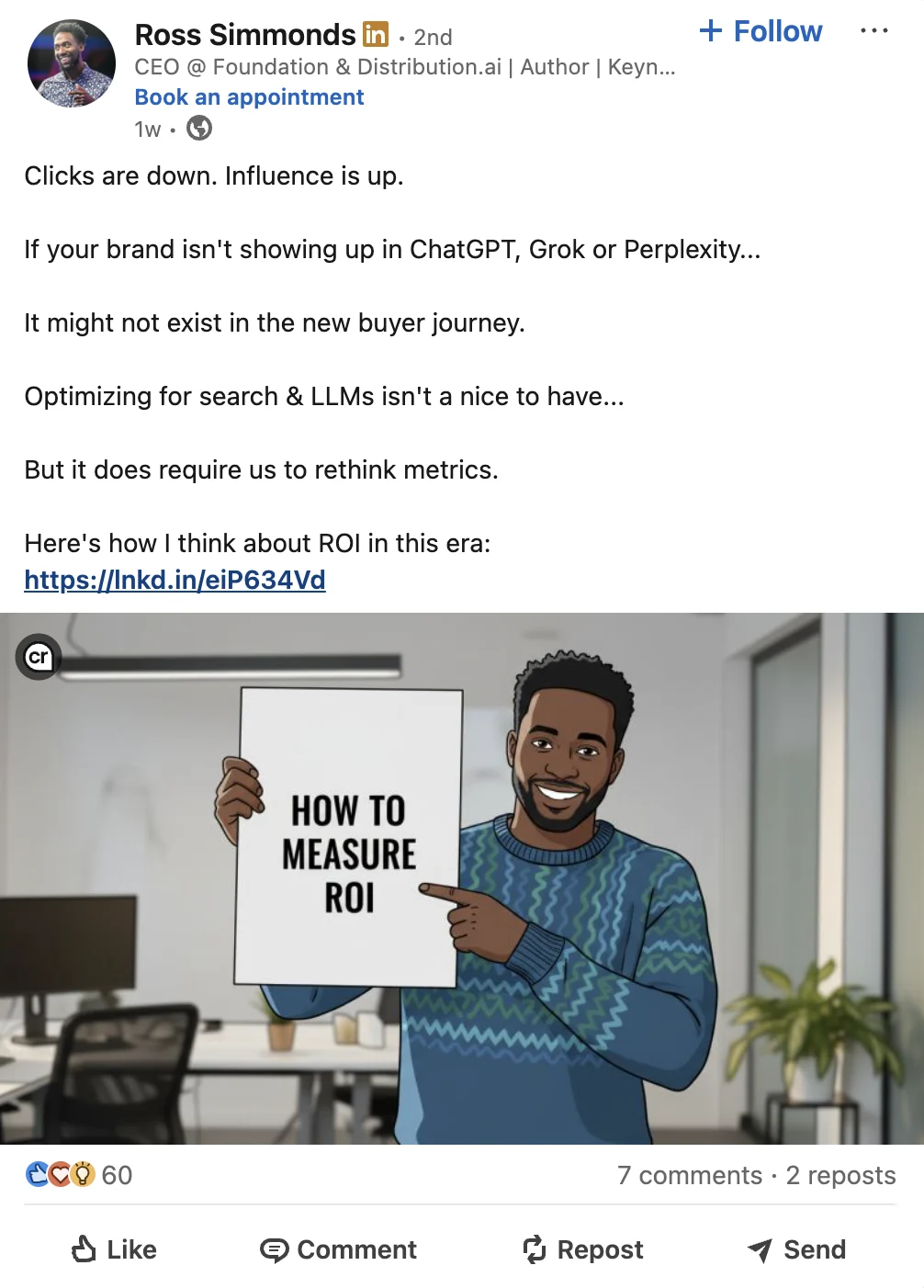
If the topic is meaty, turn the same topic into a short carousel style visual asset that breaks the long form piece into bite sized pieces.
2. Instagram
On Instagram, lean into visual content. Carousels and static images also do well because people save them.
Pull the best parts of the long form content, simplify them, and package them as quick “swipe and learn” slides.
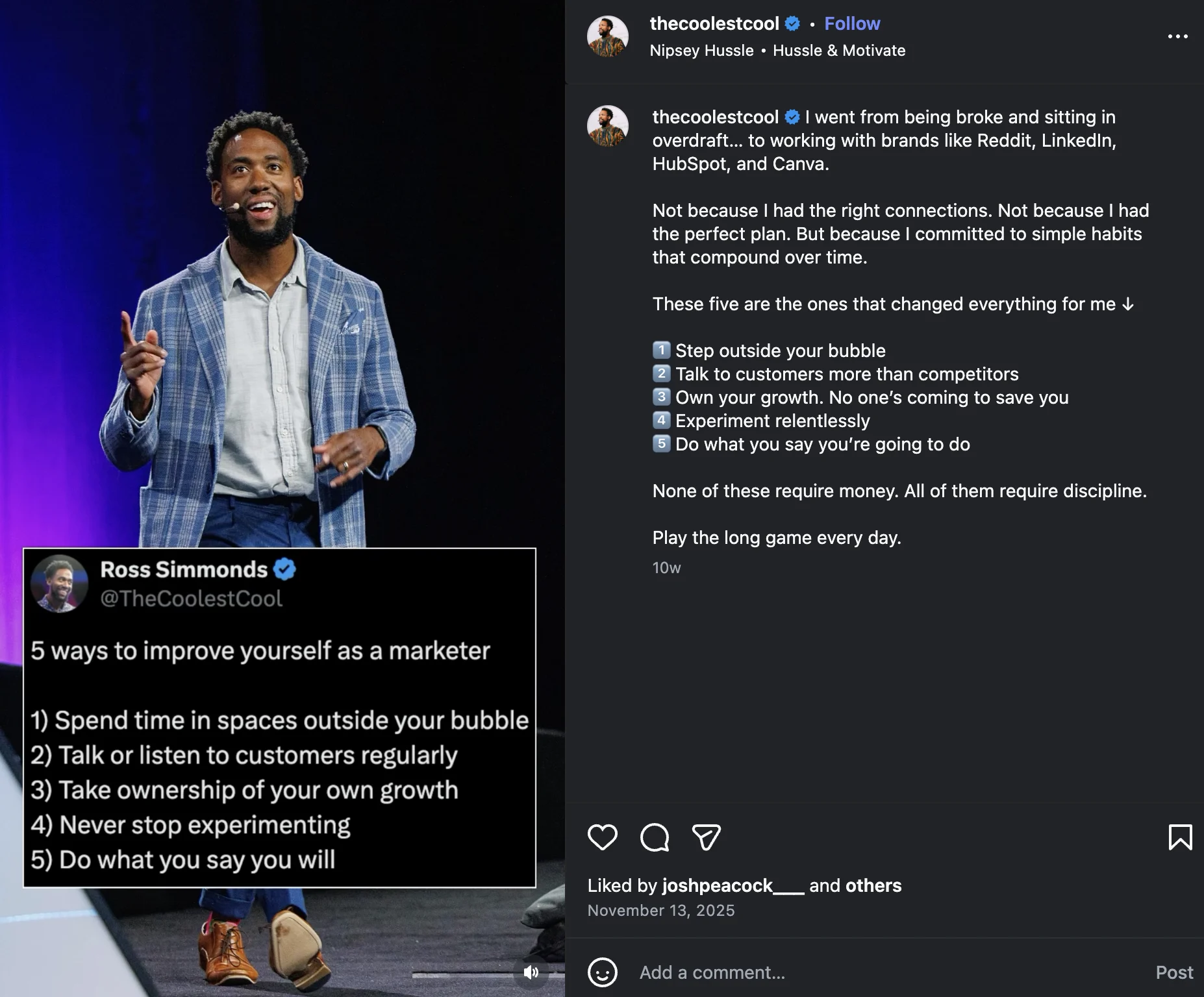

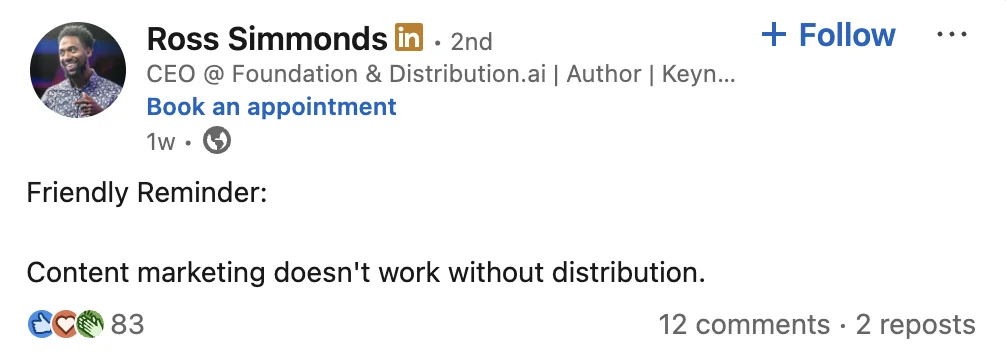
Here’s a great example by Ross Simmonds where he simply used one of his tweets to create a high value single image post and turned it into a solid Instagram post.
If you have video content, turn key moments into short form videos and keep the captions short and clean.
3. TikTok
The repurposing strategy is even simpler for this one. Take one idea from the long form piece and build one short video around it. Then repeat with the next idea. TikTok rewards clarity and hooks, so keep it tight and let audience segments tell you what angle lands.
4. X (Formerly Twitter)
On X, repurpose content into multiple posts. Break the same content into small, fast insights, and test different hooks. If one angle gets traction, turn it into a thread and link back to the blog post.
This is a great platform for learning what your broader audience actually cares about.
5. Facebook
On Facebook, keep it straightforward. Practical tips, short explanations, and shareable posts tend to win. You can turn blog posts into simple social posts, or use one key statistic as the entire post and let the comments do the work. Alongside strong content, your profile image also shapes first impressions. A facebook profile picture maker can help you create a clear, professional look that aligns with your brand and improves recognition across the platform.
6. YouTube
For YouTube, treat Shorts as the distribution layer. Pull key moments from long form YouTube videos, turn them into short videos, and let those clips drive people to the full episode or the blog content. An AI clips generator can help surface the most engaging moments without manually reviewing hours of footage.
Shorts are how you stay visible, long videos are where you build depth. It can also support video content monetization by using short clips to drive more viewers back to your core content. But if you have a library of long form videos, here’s a great example from Amazon.
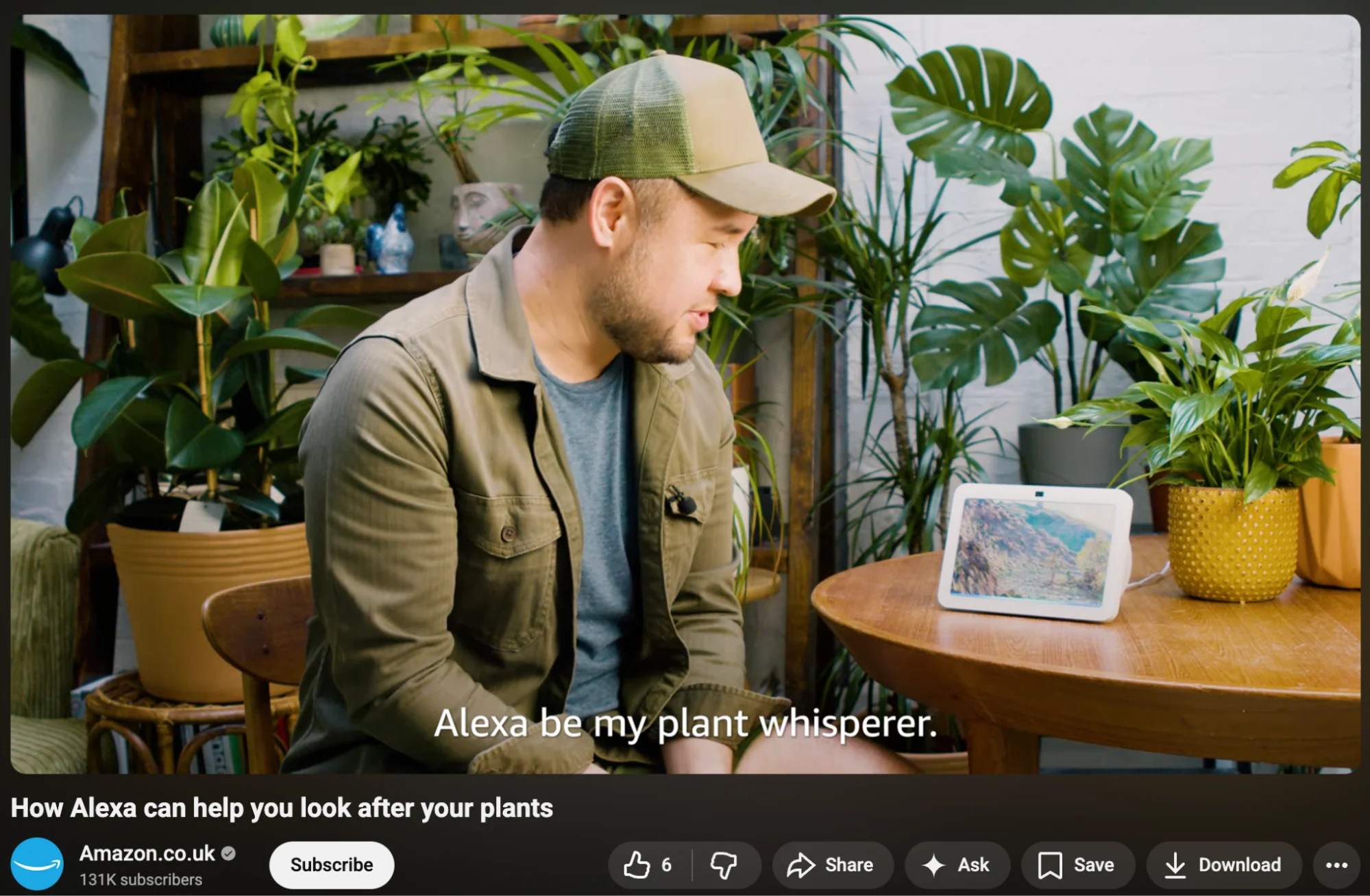
They used an expert-led video to tackle a follower question, then carried the same takeaway into a blog post.
Step 4: Focus On The Numbers
If your existing content includes numbers, use them. Key statistics are the easiest way to create social media posts that feel credible fast.
Pull 3–5 data points from a detailed blog post, content created from a blog post template, research reports, case studies, or even internal notes. Then turn each one into its own post. One stat, one takeaway, one line on why it matters to the target audience. That’s it.
This works across different platforms because numbers travel well. On LinkedIn, it becomes a clean insight post. On X, it becomes a sharp one-liner. On Instagram, it becomes a static image or a simple carousel slide. Same content, different formats.
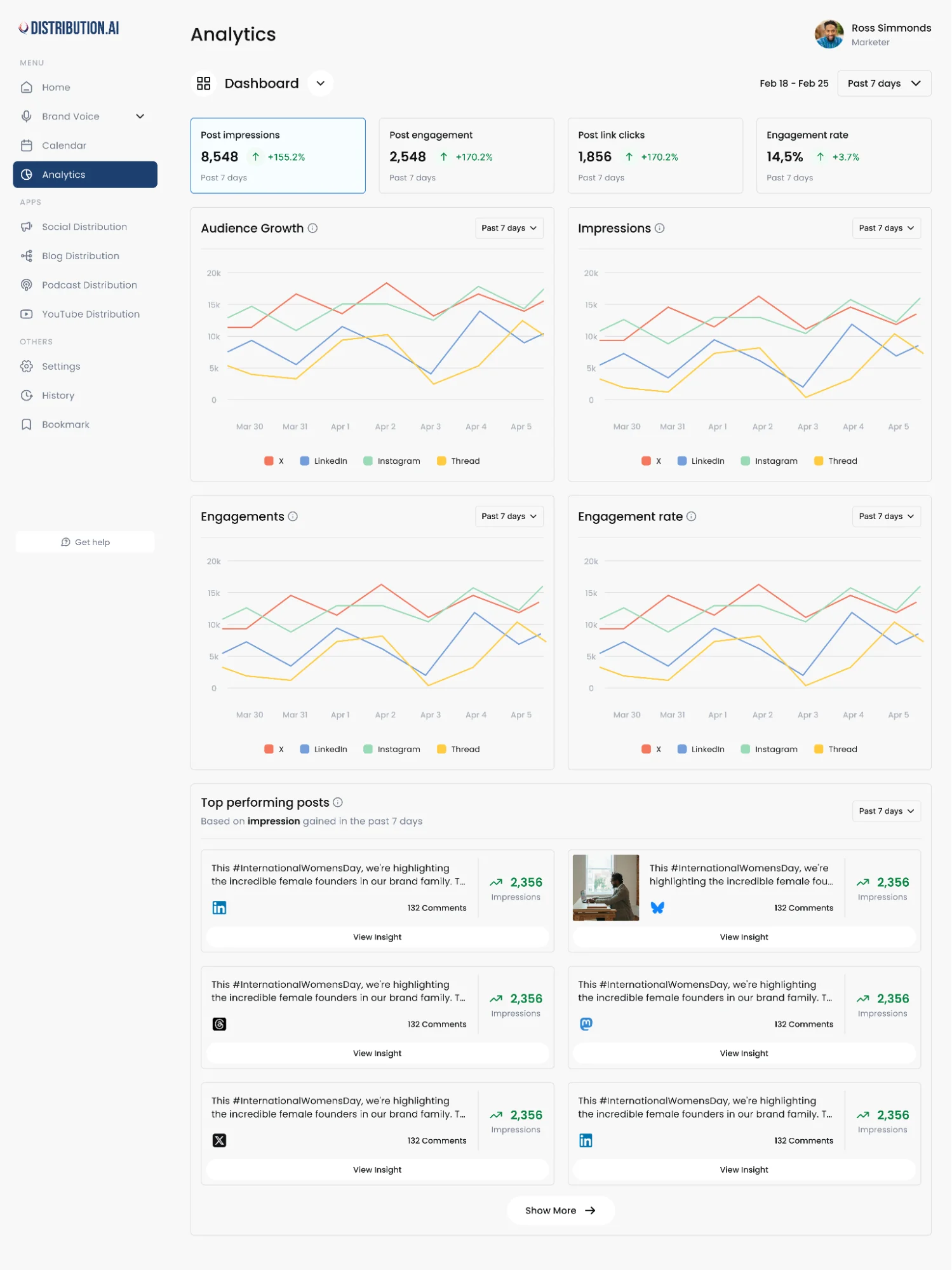
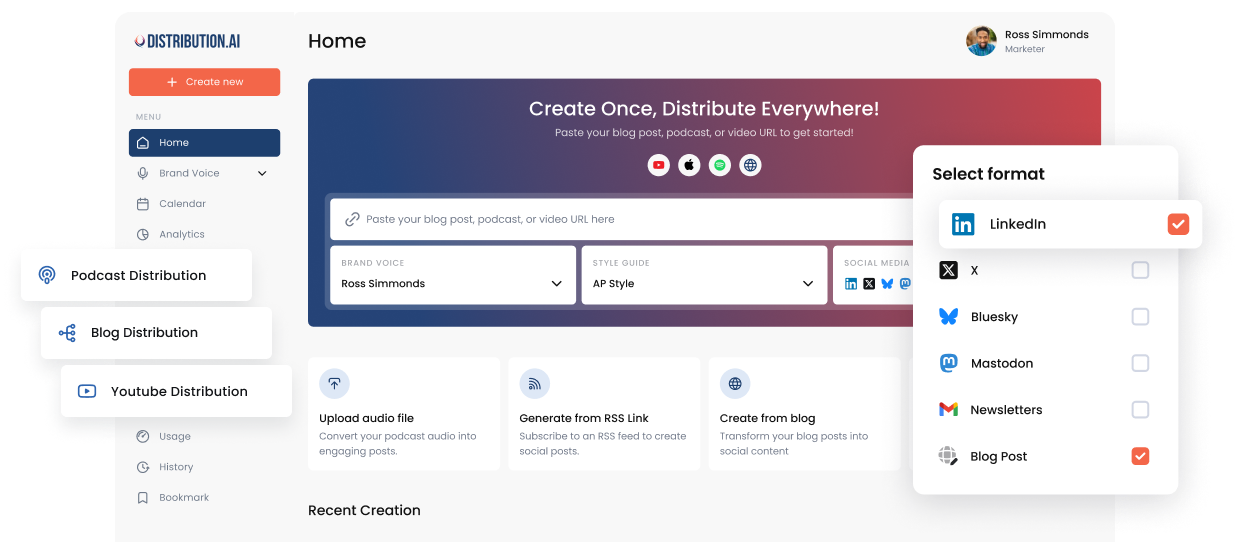
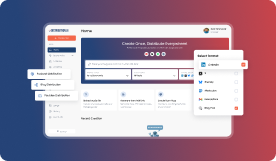
Tools like Distribution.ai makes this simple with an inbuilt dashboard for all your platforms being used in content distribution.
Step 5: Use Memorable Quotes
Every long form piece has a line that hits. A strong framing, a punchy truth, a sentence that sums up the whole point. That’s your quote.
Look for lines you would actually highlight if you were reading the blog content for yourself.
Then repurpose that into a LinkedIn post opener, a social media snippet, or a visual quote card. The quote does the hook work for you, and the rest of the post is just context.
Step 6: Spread It Out And Let It Work
The biggest mistake is dumping everything on the same day.
A smarter content strategy is to publish across multiple platforms over one to two weeks, then watch what drives real responses. The posts that get saves, shares, replies, and clicks are the ones worth turning into more formats.
That’s the real content repurposing strategy. Start with one long form piece, tailor content for different platforms, and use what performs to guide the next round of repurposing.
How To Repurpose Content for Social Media Without Sounding Repetitive
The goal is to take one strong idea from your existing content and adapt content so it feels native on each platform.
Here’s what will help you:
1. Change The Format, Not The Message
Keep the brand message consistent, but switch the container.
A detailed blog post can turn into a LinkedIn post, then a carousel, then a short video. Same topic, different formats.
That’s how you create social media posts across multiple platforms without it feeling like copy-paste.
2. Lead With A Different Hook Each Time
If you’re turning blog posts into multiple social media posts, you can’t open them all the same way. Use different entry points:
- A bold opinion
- Key statistic
- A memorable quote
- A quick story
- Some mistakes
You’re still repurposing content, but the post feels fresh because the angle is fresh.
3. Match The Platform And Audience Preferences
Different platforms reward different behaviors.
Pew’s 2025 survey found 63% of U.S. adults ages 18–29 use TikTok, but only 12% of adults 65+ do, so the people consuming short videos are often not the same crowd you’re reaching on more professional channels.
On LinkedIn, written content and clarity win. On Instagram, visual content and bite sized pieces win. On TikTok, key moments and short form videos win. On X, multiple posts and fast iterations win.
This is also where audience segments matter. Your target audience on LinkedIn may not be the same people watching short videos on TikTok, even if they care about the same topic.
4. Turn One Long Form Piece Into A Mini Series
Instead of trying to squeeze a long form piece into one post, break it into a simple sequence.
One long form content asset can become five social posts spread across a week, plus social media snippets you can reuse later.
That keeps your posting consistent across multiple channels and improves content distribution without making your feed feel repetitive.
5. Refresh The Surface, Keep The Core
If a post performs well, don’t be afraid to reuse the idea. Just change the format or update it with fresh content.
Add a new example. Pull a different quote. Clip a different section of the YouTube video. Use a different visual asset.
That’s the sweet difference between repeating the same content and repurposing high performing content.
Your Best Content Shouldn’t Have a Publish Date, It Should Have a Lifespan
If something helped a real person once, it can help the next person scrolling today.
So stop treating social media as a slot machine where every post has to be brand new.
Treat it like a highlight reel. Keep resurfacing the clearest ideas, the sharpest examples, and the simplest wins, and you’ll build familiarity, not fatigue.
That’s how you earn more attention on social media. By showing up with the same message, expressed better each time.
Promote, repurpose & distribute your content with AI
Write 10x faster, engage your audience, & never struggle with the blank page again.
Start 15-Day Free Trial
Frequently Asked Questions
Author

Promote, repurpose & distribute your content with AI
Start 15-Day Free Trial